Most of us reach for a can of cooking spray without reading the label. It's quick, it coats the pan, and it feels like the easy way to use less oil. Turn the can around, though, and the ingredient list is usually longer than you'd expect for something sold as "just oil."
The main difference is simple: an olive oil spray bottle holds only the oil you pour into it, while an aerosol can adds an emulsifier, an anti-foaming agent and a propellant to push the oil out. Both give you a light coating. What you're spraying, and how much control you have, is where they part ways.
Here's how the two compare in the pan, at the table and over time.
What's covered:
- What's inside a can of cooking spray
- How an olive oil spray bottle works
- Cooking spray vs. oil: control, flavor and cost
- That sticky film on your pans
- Which oil to put in a spray bottle
What's Inside a Can of Cooking Spray?
Recipes vary by brand, but most aerosol cooking sprays follow a similar formula. Alongside the oil, the label usually lists:
- An emulsifier, most often soy lecithin, which helps the spray release evenly and keeps food from sticking.
- An anti-foaming agent, such as dimethyl silicone, which stops the oil from foaming as it leaves the nozzle.
- A propellant, such as propane, butane, isobutane or nitrous oxide, which pushes the contents out of the pressurized can.
These ingredients are approved for food use, so there's no need to panic about the can in your cupboard. Still, plenty of home cooks would rather know exactly what goes on their food. If all you want is a little olive oil on your vegetables, a can gives you that plus a few things you didn't ask for. The easiest habit is to read the label on the brand you buy.
How an Olive Oil Spray Bottle Works
A refillable olive oil spray bottle has no pressurized gas inside. You press a trigger, and a small pump pushes oil through the nozzle. In a well-made sprayer, the pump builds up pressure before it releases the oil, so it comes out as a fine, even mist rather than a squirt or a stream.

The ingredient list is whatever you pour in: extra virgin olive oil for salads and roasting, a lighter olive oil for higher heat, or avocado oil if that's your everyday choice. You decide the oil, its flavor and its quality.
Because it's refillable, the same bottle lives on your counter for a long time. You top it up from the big bottle of oil you already buy instead of picking up a new can every few weeks.
Cooking Spray vs. Oil: Control, Flavor and Cost
Control in the pan
Aerosol cans are good at one thing: a fast, wide burst. That's handy for a muffin tin, but it's hard to aim. Overspray lands on the stovetop, the counter and the outside of the pan.
A refillable oil spray bottle lets you decide where the oil goes and how much you use. A short pull covers a skillet with a thin film. Two or three pulls coat a tray of vegetables. Spray, toss, and add a little more only where it's needed. That matters most with foods that soak up oil, like eggplant, mushrooms and bread, which brown more evenly with a thin layer than with a puddle in one corner.
Flavor
Many cooking sprays are made with canola or a neutral vegetable oil, even when the front of the can mentions olive oil. That's fine for greasing a cake pan, but you lose the flavor that makes olive oil worth using in the first place.

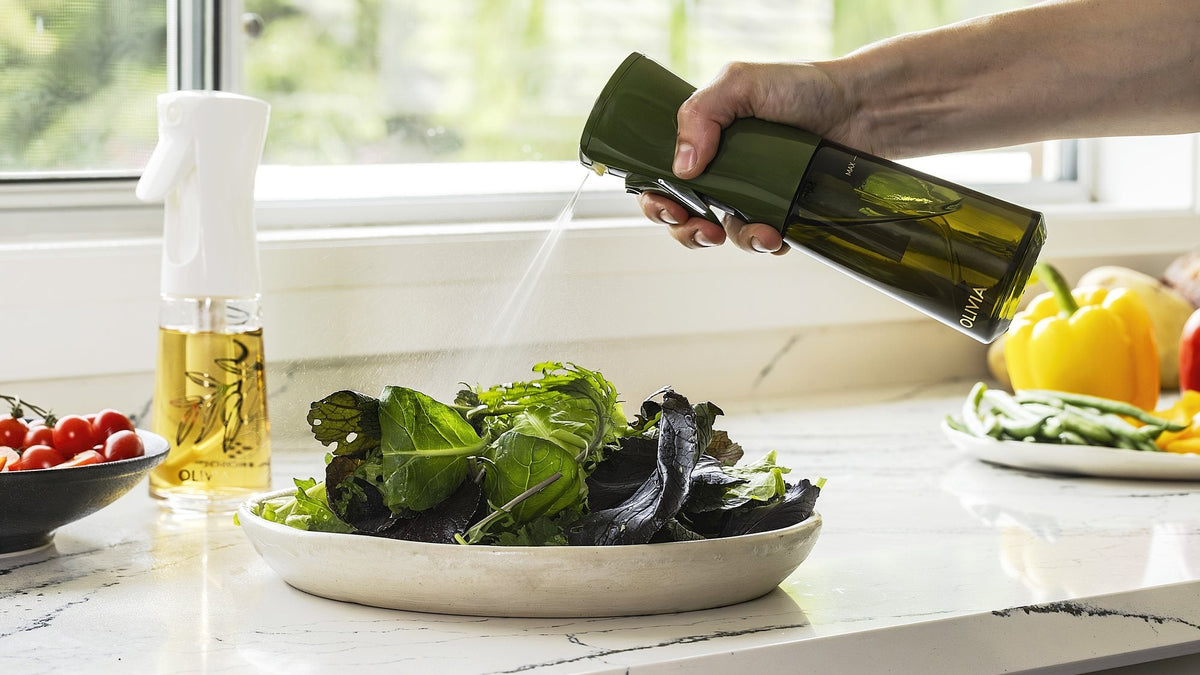
Fill your own bottle with a good extra virgin olive oil and the mist carries that fruity, peppery taste onto salads, roasted vegetables and toast. It becomes a finishing tool as well as a cooking tool. A light mist over warm roasted bruschetta or a bowl of greens adds flavor without drowning the dish.
Cost over time
A can of cooking spray looks cheap on the shelf, but you're paying for packaging, propellant and a fairly small amount of oil. When it runs out, the can goes in the trash and you buy another.
A spray bottle costs more up front and then runs on oil you already have. Because a mist spreads a little oil over a large surface, a bottle of olive oil also tends to last longer than when you pour straight into the pan. Over months of regular cooking, refilling is usually the more economical habit.
That Sticky Film on Your Pans
If you've ever found a tacky, brownish layer on a baking sheet or skillet that won't scrub off, cooking spray is a likely cause. Over time, the residue from some sprays bakes onto hot surfaces and builds up into a film. That's why many cookware and air fryer manufacturers advise against aerosol sprays on non-stick coatings. Check the care instructions for your own pans.
To clean cooking spray residue off a pan, make a paste of baking soda and a little warm water, let it sit on the sticky area for 15 to 20 minutes, then scrub gently with a non-scratch sponge. Repeat on stubborn spots. On non-stick pans, skip abrasive scrubbers entirely.
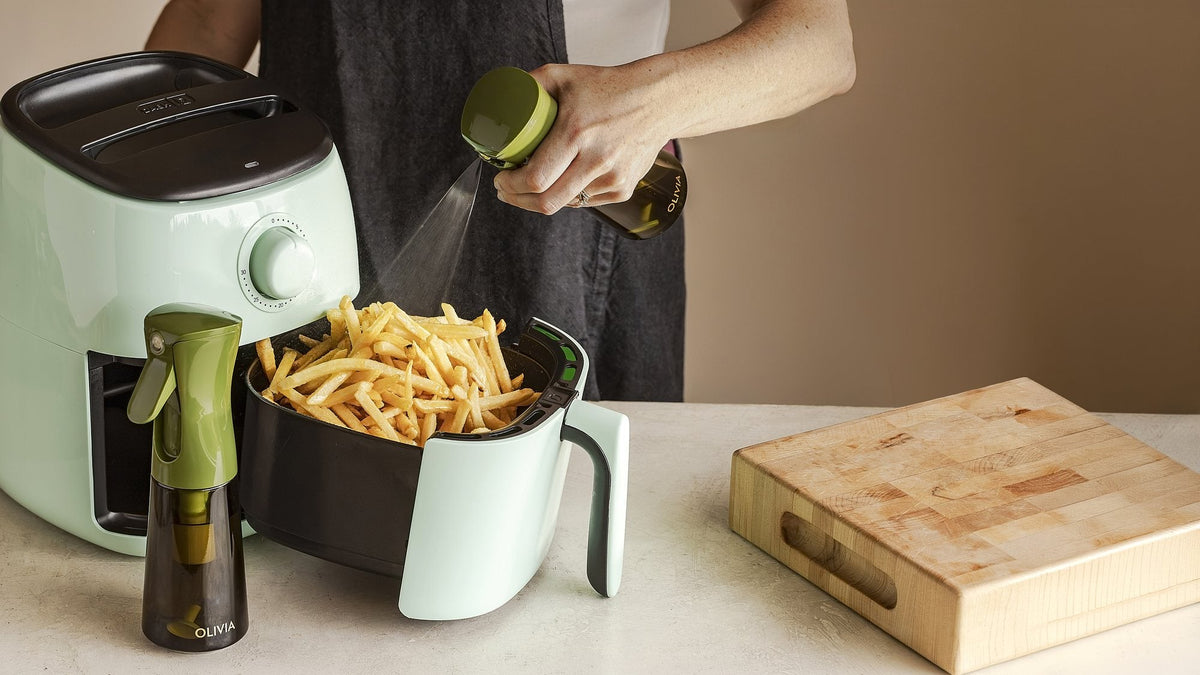
Spraying plain oil from a refillable bottle avoids the lecithin build-up, because the mist contains nothing but oil. A thin layer is also easier to wipe away after cooking than a heavy pour. If you cook in an air fryer a lot, here's how to use an olive oil sprayer in your air fryer for crisp results without the can.
Which Oil Should You Put in a Spray Bottle?
Extra virgin olive oil is the favorite for salads, vegetables and finishing. Light olive oil and avocado oil are good choices when you cook at higher temperatures. Some cooks keep a second bottle with vinegar for salads.

Two tips keep the mist fine. Store the bottle at room temperature, because olive oil thickens in the cold. And keep herbs, garlic and other bits out of the bottle unless the maker says it's fine, since particles can block the nozzle. If you're still deciding between a pourer and a sprayer, our guide on how to choose the right oil dispenser for your kitchen walks through the options.
A Refillable Sprayer That Stays a Mist
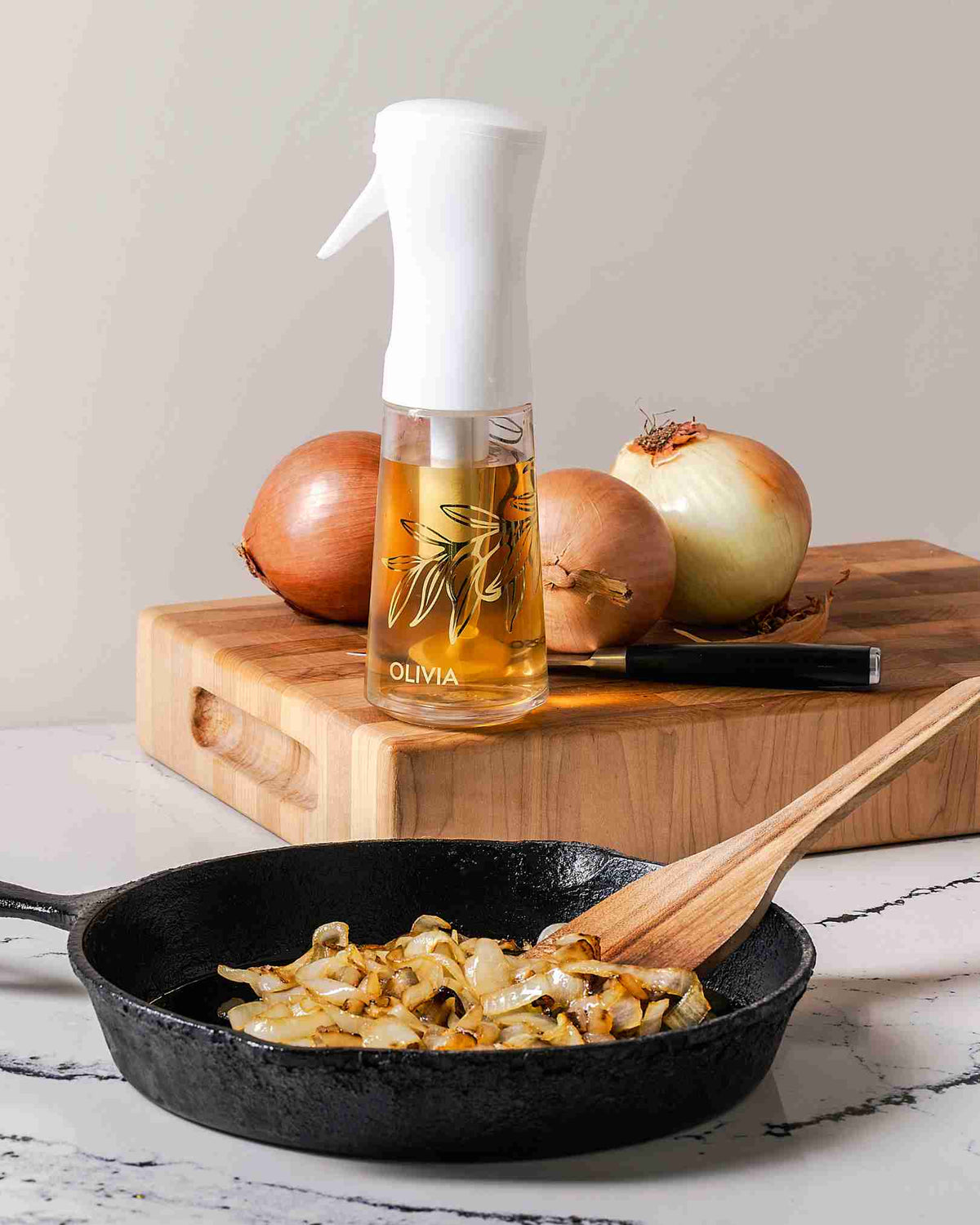
If you like the convenience of cooking spray but want to choose your own oil, a refillable olive oil sprayer is the natural swap. OLIVIA Signature is a borosilicate glass sprayer that turns your favorite olive oil into a fine, even mist, with no propellants and nothing added.
It comes in a 200 ml size for everyday cooking and a compact 130 ml size, in Olive Green, Golden Leaves and Black. See the OLIVIA Signature 200 ml olive oil sprayer, or browse 10 everyday ways to use an oil sprayer for cooking for ideas.
Frequently Asked Questions
Can you put olive oil in a spray bottle?
Yes, as long as the bottle is made for oil. A sprayer designed for cooking oil has a pump and nozzle that can handle oil's thickness, while a regular water spray bottle usually sputters or clogs.
Can you put olive oil in a plastic spray bottle?
Some plastic sprayers are made for oil, so check that yours is food-safe and meant for cooking oils. Many cooks prefer glass because it doesn't hold on to old oil smells and lets you see how much is left.
Is cooking spray the same as cooking oil?
Not quite. Cooking spray contains oil, but aerosol versions usually add an emulsifier, an anti-foaming agent and a propellant. A refillable spray bottle contains only the oil you put in it.
Is olive oil spray really 0 calories?
No. US labels may list zero calories when a serving has fewer than five, and a serving of cooking spray is a very short spray, often about a quarter of a second. A longer spray still contains oil, and oil has calories.
How do you clean cooking spray residue off a pan?
Cover the sticky area with a paste of baking soda and warm water, leave it for 15 to 20 minutes, then scrub gently with a non-scratch sponge. Repeat for stubborn spots, and avoid abrasive pads on non-stick pans.
Swapping the can for a bottle you fill yourself is a small change, but you'll notice it every time you cook.