A little oil can bring a meal together. Getting it where you want it—and in the amount you want—is another matter. One quick pour can leave roasted vegetables sitting in a puddle, while a narrow drizzle can miss half the salad.
The right oil dispenser for your kitchen should make everyday cooking easier. It should suit the dishes you prepare, feel comfortable in your hand, and be simple to refill and clean.
From traditional pouring bottles to refillable oil sprayers, here’s what to consider before choosing yours.
Start With How You Cook
Think about the last few meals you made. Were you measuring oil into a marinade, coating vegetables for roasting, or adding a finishing drizzle to a bowl of pasta?
Those small details help determine which dispenser will be most useful.
If you regularly measure several tablespoons for dressings or recipes, a pouring bottle makes that task straightforward. If you often want a light coating across food, an oil sprayer is worth considering.
You may find a place for both: a pourer for measured quantities and finishing drizzles, and a sprayer for everyday coverage.
Choose Between Spraying and Pouring
Pouring dispensers: useful for drizzling and measuring
A traditional oil dispenser uses a spout to direct a stream of oil. It’s a practical choice for filling a measuring spoon, mixing a vinaigrette, or finishing hummus with a generous drizzle.
Look for a spout that pours predictably and is easy to wipe clean. Consider how the opening closes between uses, too.
The main trade-off is that pouring concentrates oil in one spot. When coating a tray of ingredients, you may need to toss or brush the food to distribute it.
Oil sprayers: useful for covering a wider surface
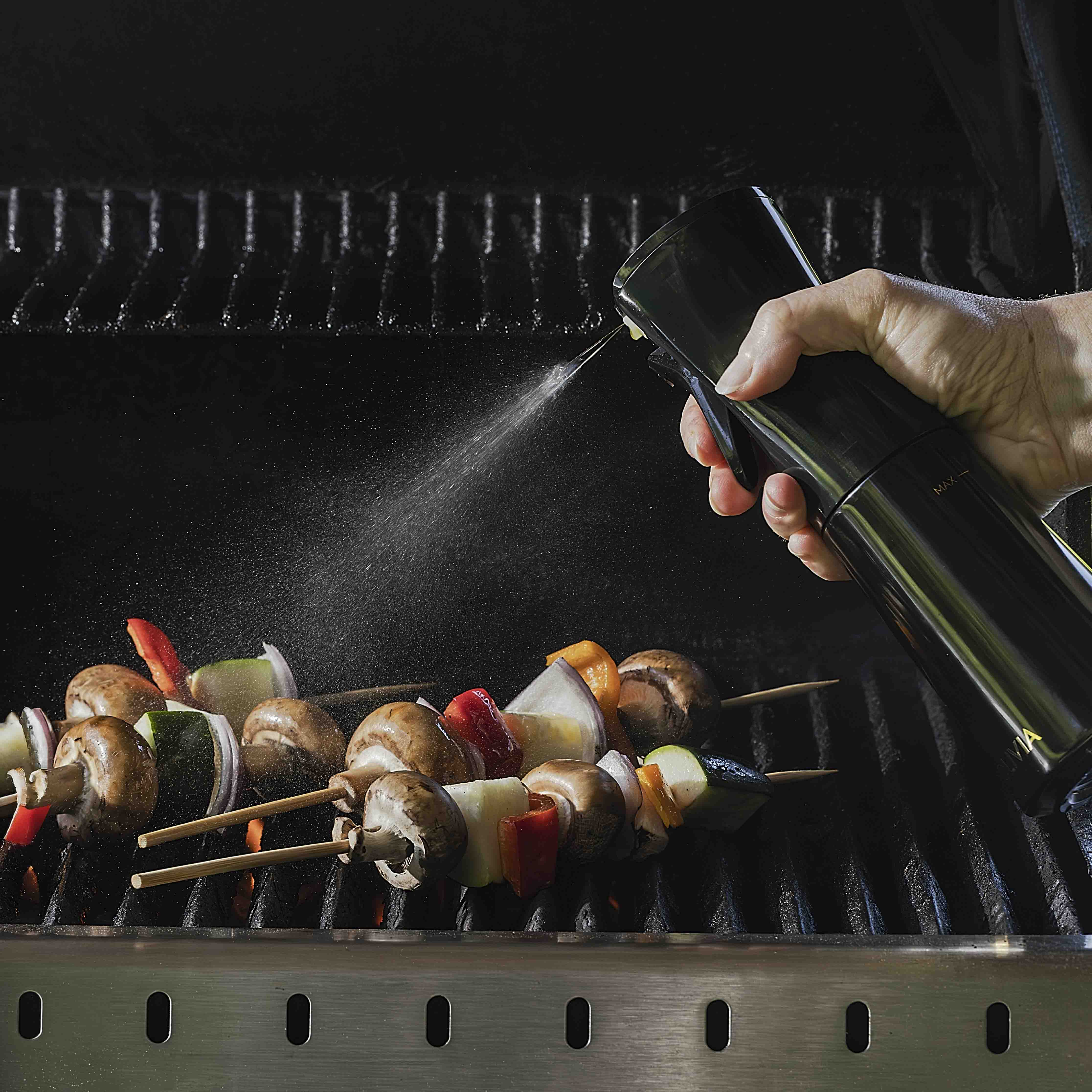
An oil sprayer distributes oil across a broader area. That makes it convenient for tasks such as coating vegetables before roasting, lightly dressing greens, or preparing food for an air fryer.
Look for a spray pattern that provides coverage rather than a narrow jet. Comfortable operation matters as well, especially when you’re preparing several portions.
Spraying also lets you add oil gradually. Start with a light coating, toss or turn the food, and add more where needed. When a recipe requires an exact quantity, use a measuring spoon or scale.
If you’re weighing a refillable sprayer against a can of cooking spray, here’s how an olive oil spray bottle compares with aerosol cooking spray.
Consider the Bottle Material
Material affects how a dispenser feels, looks, and fits into your routine.
Glass offers a substantial feel and, when transparent, lets you see how much oil remains. It is also breakable, so consider where you’ll use and store it.
Stainless steel is an option if you prefer an opaque container. Check how easily it opens for refilling and whether you can judge the remaining oil level.
Plastic can be lightweight and convenient to handle. Choose a container intended for food and oil storage, and follow its care instructions.
Look beyond the bottle itself. The spout, trigger, seals, and other components also affect the experience of using the dispenser.
If you’re torn between the two most common materials, this side-by-side on choosing a glass vs. plastic olive oil spray bottle goes into more detail.
Pick a Capacity That Matches Your Routine
A large dispenser means fewer refills, but it also takes up more space and weighs more when full. A smaller bottle can be easier to handle and fit neatly into a compact kitchen.
Ask yourself:
- Do I cook every day or a few times a week?
- Will this hold my main cooking oil or an oil I use occasionally?
- Do I prefer a smaller bottle or fewer refills?
- Will it fit comfortably in the cupboard where I plan to keep it?
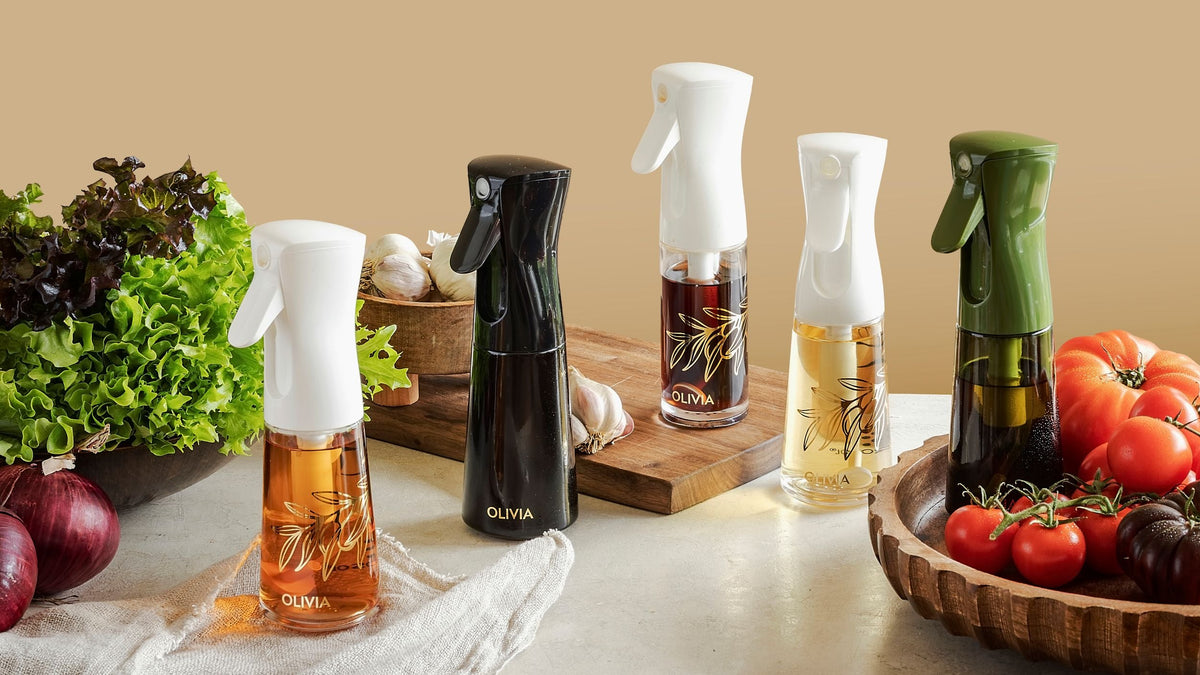
For OLIVIA Signature, the 130 ml format offers a compact option, while the 200 ml format provides more capacity for everyday cooking.
Choose the size you’ll enjoy using, rather than automatically choosing the largest.
Check Refilling and Cleaning Before You Buy
A dispenser should be convenient after the first use, too.
Look for an opening you can fill comfortably and a closure that is straightforward to remove and replace. Follow the recommended fill level, and wipe away spills before putting the dispenser back.
For cleaning, check the instructions for each component. A glass bottle and a spray mechanism may require different care; dishwasher-safe glass does not mean the entire assembly belongs in the dishwasher.
Consider whether the design lets you clean the parts that come into contact with oil. Easy maintenance is especially useful if you plan to switch between different cooking oils.
If you already have a sprayer at home, our Olivia oil sprayer guide shows how to fill, prime and clean it step by step.
Make Sure It Works With Your Preferred Oil
Before buying a sprayer, check the manufacturer’s compatibility guidance for the oil you use most.
A bottle designed to spray water is not automatically suitable for cooking oil. Temperature and consistency can also affect how a liquid moves through a spray mechanism.
If you enjoy infused oils, check the instructions before using oils containing herbs, garlic, or other particles. Do not assume every liquid that fits inside the bottle will work with its nozzle.
For everyday use, choose a dispenser designed for your preferred cooking oil and the way you intend to apply it.
Choose Something Comfortable to Use
An attractive dispenser still needs to work well in your hand.
Think about its weight when full, the shape of the grip, and how you’ll operate the spout or trigger. A stable base and a bottle that fits your storage space are useful details.
Picture using it while making dinner: taking it out, coating your ingredients, putting it down, and cleaning up afterward. The right design should make that sequence feel easy.
Where OLIVIA Signature Fits In
If your routine includes roasting vegetables, preparing salads, or coating food before air frying, a refillable sprayer can be a useful addition.
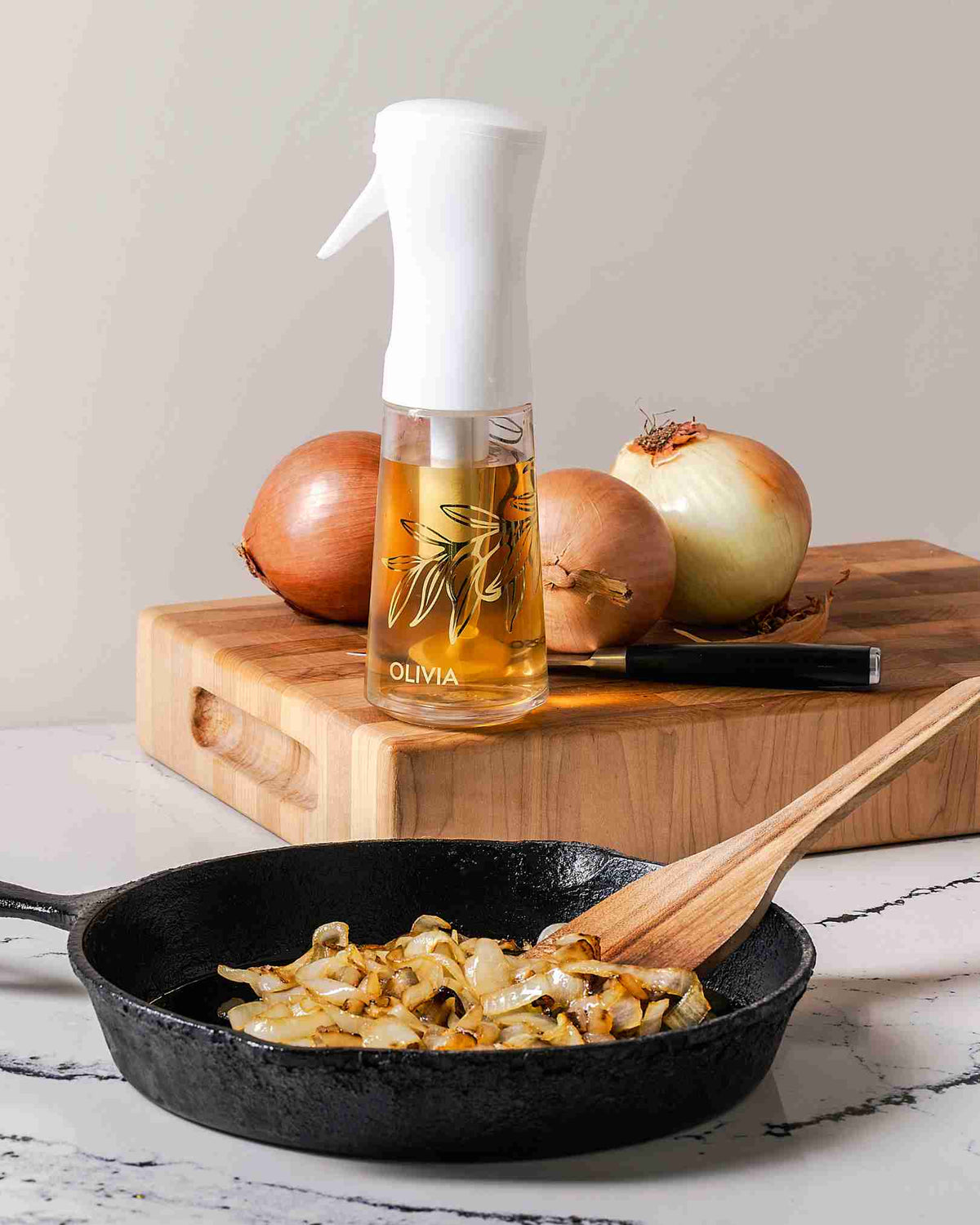
OLIVIA Signature pairs a borosilicate glass bottle with Flairosol™ spray technology and offers 130 ml and 200 ml formats. It’s designed for cooks who want to apply oil as a spray and refill the bottle with a compatible cooking oil.
Choose the compact format if handling and space are your priorities, or the larger format if you prefer extra capacity.
Explore the OLIVIA Signature 200 ml Oil Sprayer to find a fit for your daily cooking routine.
Frequently Asked Questions
What is the best type of oil dispenser for a kitchen?
The best type depends on how you cook. A pouring dispenser is useful for drizzling and measuring, while a sprayer is convenient for applying a light coating across food. Some kitchens benefit from having both.
Can an oil sprayer replace a pouring bottle?
It can handle many coating tasks, but a pouring bottle remains useful when you need larger quantities or a finishing drizzle. Choose based on the tasks you do most often.
Can I put olive oil in an oil sprayer?
Yes, provided the sprayer is designed for olive oil. Check the manufacturer’s compatibility and care instructions before filling it.
Should I choose a small or large oil dispenser?
Choose a size that balances comfortable handling with your preferred refill frequency. A smaller dispenser may suit limited space or occasional use, while a larger one offers more capacity for frequent cooking.