If you're shopping for an olive oil spray bottle, the first real decision isn't the nozzle or the size. It's the material. Glass and plastic both hold oil and both can spray it, but they behave differently once the bottle has lived on your counter for a few months.
For most home cooks, glass is the better choice. It doesn't hold on to old oil smells, it's easy to see how much is left, and it cleans up properly with warm soapy water. Plastic wins on weight and on surviving a drop onto a tile floor, so it still has a place in a camping kit or a kitchen with small kids.
Below is a plain comparison of the two, plus a few things to check whichever way you go.
What's covered:
- Glass vs. plastic at a glance
- Light, heat and oil freshness
- Smell, flavor and old oil
- Cleaning and day-to-day care
- Durability: drops, scratches and wear
- How to choose your olive oil spray bottle
Glass vs. Plastic at a Glance
Here is the short version before we get into the details. Neither material is perfect, so it helps to know where each one is strong.
| What matters | Glass | Plastic |
|---|---|---|
| Holding on to smells | Doesn't absorb oil or odors | Can pick up old oil smells over time |
| Seeing the oil level | Clear, stays clear | Often clear at first, can cloud or scratch |
| Cleaning | Rinses clean, no greasy film left behind | Oil film can cling to the inside walls |
| Weight | Heavier, feels steady in the hand | Light and easy to pack |
| Dropping it | Can chip or break | Usually survives a fall |
| Look on the counter | Looks like a proper kitchen tool | More utilitarian |
The nozzle and pump matter just as much as the bottle. A beautiful glass bottle with a weak trigger will still sputter, so look at both. If you're new to the idea of a refillable sprayer, our comparison of an olive oil spray bottle versus aerosol cooking spray explains why so many cooks switch.
Light, Heat and Oil Freshness
Olive oil has three everyday enemies: light, heat and air. All three slowly push it toward stale, flat or rancid flavors. The bottle material plays a part in the first two.
Clear glass and clear plastic both let light through. Tinted or colored glass filters some of it, which is why good olive oil is so often sold in dark bottles. If your sprayer is clear, the simple fix is where you keep it: a cupboard or a shady corner of the counter, not the windowsill.

Heat is where glass has a quiet advantage. A thin plastic bottle sitting next to the stove warms up quickly and can soften slightly over time. Borosilicate glass, the type used in lab glassware and many oven dishes, handles temperature swings better than ordinary glass. That said, no oil bottle should live right beside a burner. Keep it a step away from the heat, and never spray toward an open flame or a hot burner.
How much oil to keep in the bottle
Whatever the material, fill your sprayer with what you'll use in a few weeks rather than topping it up to the brim with a month's supply. Smaller, fresher fills taste better and leave less oil sitting in the bottle between washes.
Smell, Flavor and Old Oil
This is the difference most people notice first. Plastic is slightly porous at a microscopic level, and oils are good at working their way into it. After a while, a plastic oil spray bottle can carry the faint smell of whatever was in it before, even after a wash.
That matters if you switch oils. Spray a delicate extra virgin olive oil from a bottle that once held toasted sesame oil, and you may taste the sesame. It also matters as oil ages: a stale film inside the bottle can make fresh oil taste tired.
Glass doesn't absorb anything. Once it's clean, it's clean, so you can move from olive oil to avocado oil without any carry-over. If you like keeping more than one oil on hand, glass makes that much easier.
Cleaning and Day-to-Day Care
Every sprayer needs a proper wash now and then, because old oil thickens and is the most common reason a fine mist turns into a stream. Our step-by-step guide on how to clean an oil spray bottle covers the full routine.
Glass makes that routine simpler:
- Warm water and a drop of dish soap lift the oil film off smooth glass easily.
- You can see at a glance whether any residue is left inside.
- A bottle brush won't leave fine scratches that trap oil later.
Plastic can be cleaned well too, but greasy residue tends to cling to the walls, and scrubbing can leave a cloudy finish. Whichever you choose, let the bottle dry completely before refilling, since water left in the bottle can affect the spray.
Durability: Drops, Scratches and Wear
Here is where plastic earns its place. Knock a plastic bottle off the counter and you'll usually just pick it up again. Glass can chip or break, so it deserves a stable spot away from the edge.
Over the long run, though, glass tends to age better. It doesn't stain, cloud or hold odors, so a glass bottle that's looked after can stay in use for years. Plastic bottles often get replaced not because they break, but because they start to look and smell tired.
A few habits help either way:
- Keep the bottle on a flat surface, not on the edge of the stove or a crowded shelf.
- Wipe the outside after use so oily fingerprints don't make it slippery.
- Check the pump and seals now and then, because those wear before the bottle does.
How to Choose Your Olive Oil Spray Bottle
Material is only part of the decision. Before you buy any oil sprayer for cooking, check these points:
- The spray pattern. You want a wide, even mist, not a jet. If your current sprayer keeps streaming, here's why an oil sprayer turns into a stream and how to fix it.
- No propellants. A refillable bottle should spray only the oil you put in it.
- Size. A smaller bottle keeps oil fresher; a larger one suits households that roast and air fry most days.
- A wide opening. It makes refilling and cleaning much less messy.
- How it feels in your hand. You'll use it at the stove with one hand, so the trigger should be comfortable.
If you also want a pouring bottle for dressings and dipping bread, it's worth reading how to choose the right oil dispenser for your kitchen. Many cooks end up with one of each.

Glass That Stays on the Counter
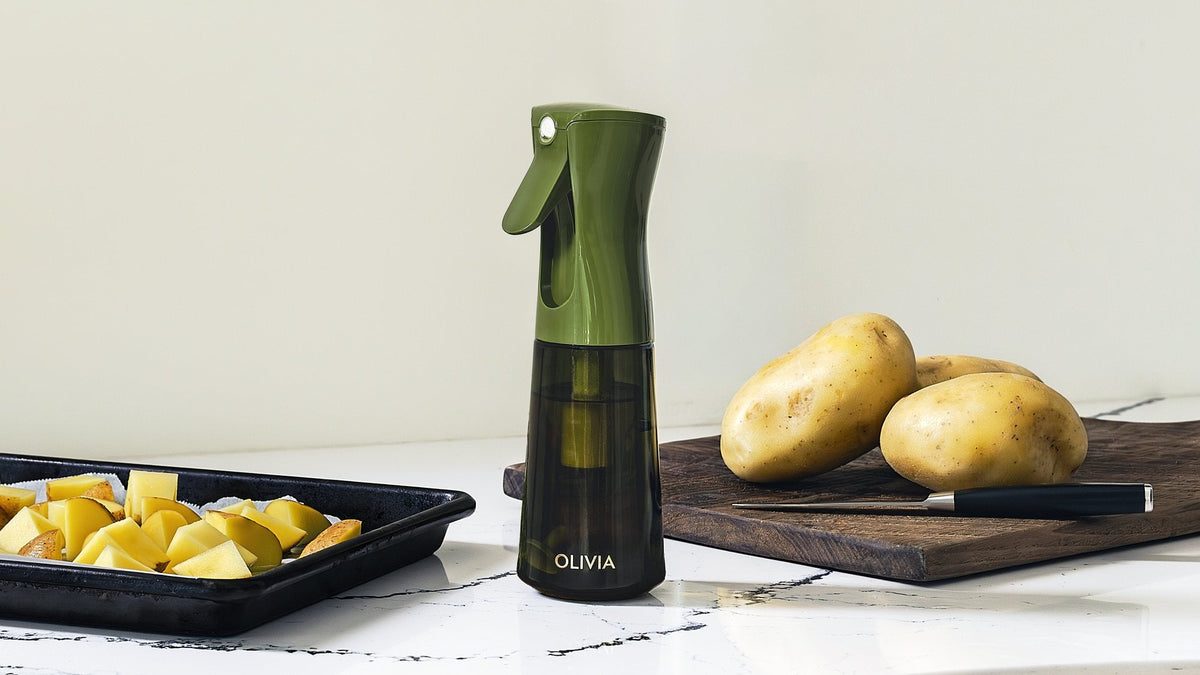
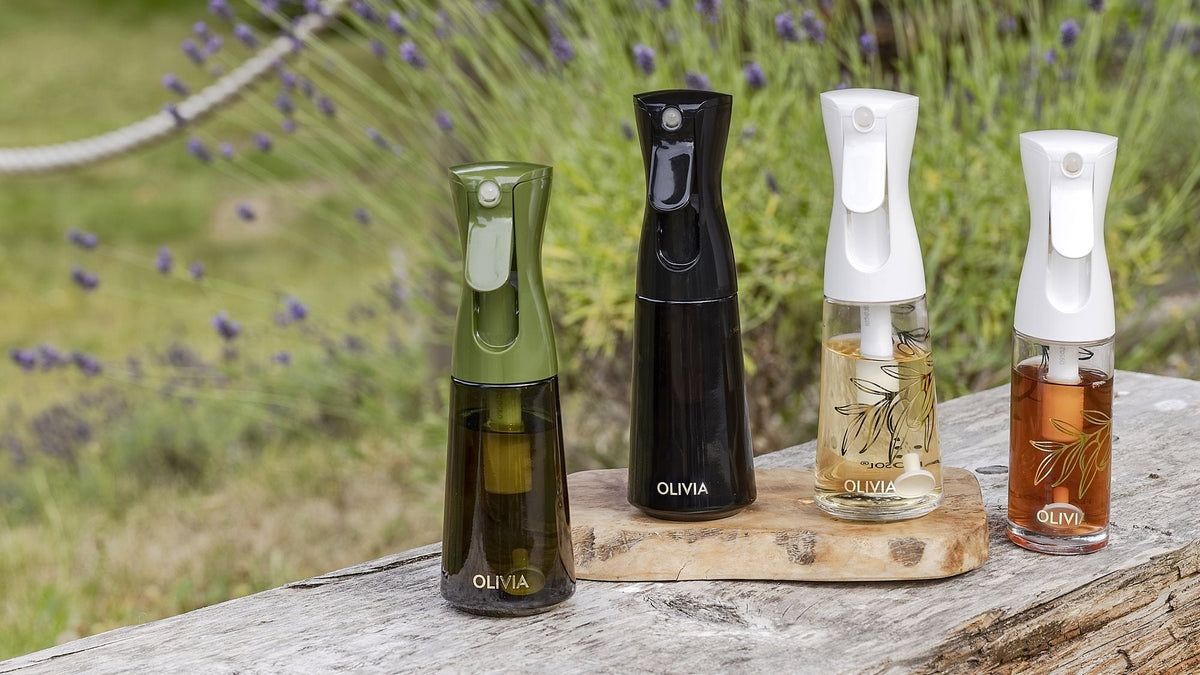
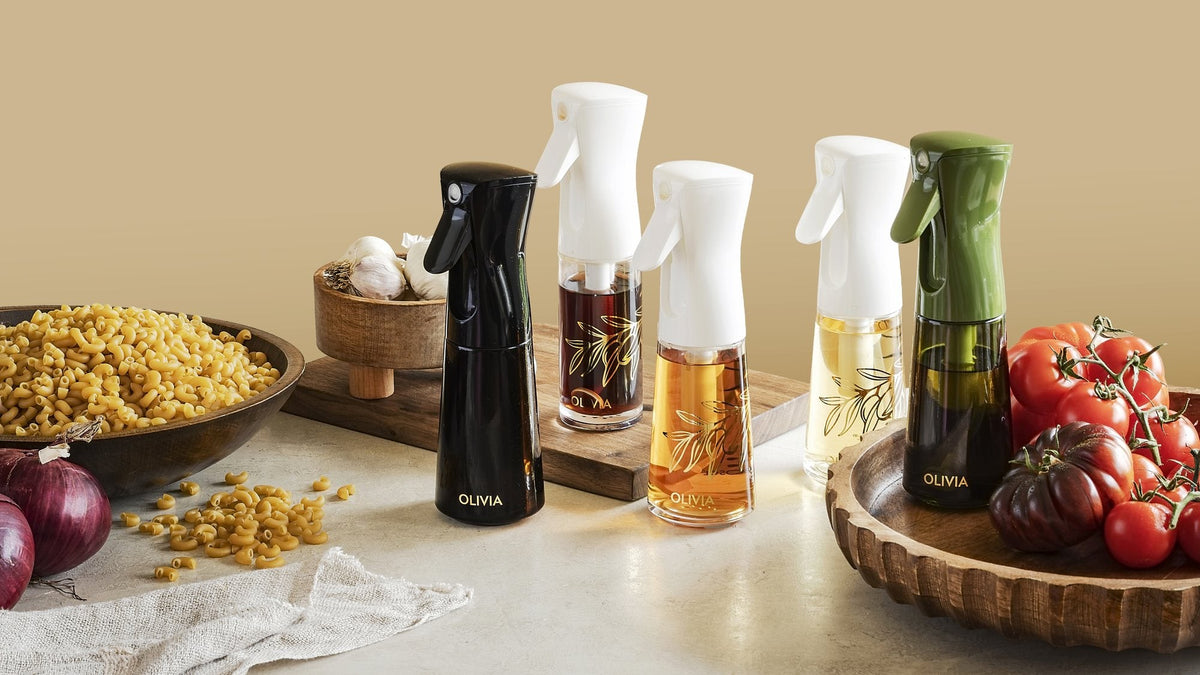
OLIVIA Signature is a refillable glass oil sprayer with a borosilicate glass bottle, so it brings the benefits above: no absorbed smells, an easy-to-read oil level, and simple cleaning. It has no propellants or aerosol, you fill it with your own oil, and it sprays a fine, even mist.
It comes in 130 ml and 200 ml sizes and in Olive Green, Golden Leaves and Black. The 200 ml Olive Green sprayer is a comfortable everyday size if you cook most nights.
Frequently Asked Questions
Can you put olive oil in a plastic spray bottle?
Yes, as long as the bottle is food-safe and made for oil. Over time plastic can absorb oil smells and build up a greasy film, so wash it regularly and replace it once it starts to smell stale or look cloudy.
Can you put olive oil in a regular spray bottle?
A regular household spray bottle is designed for thin liquids like water, so it usually squirts olive oil in a jet or clogs. A sprayer built for oil pushes the thicker liquid out as a fine mist, which is what you want for even coverage.
Do olive oil spray bottles work?
A good one does. A well-made olive oil spray bottle gives a thin, even coat across a pan or a tray of vegetables, so you can use only as much oil as the food needs. Regular cleaning keeps the mist fine.
How do you clean a glass oil spray bottle?
Empty the bottle, then shake it with warm water and a little dish soap. Spray soapy water through the nozzle, rinse with clean warm water the same way, and let every part dry completely before you refill it.
Is a glass oil sprayer good for the air fryer?
Yes. A light mist from a glass oil sprayer coats air fryer food evenly without soaking it. Spray the food rather than the empty basket, and only when the air fryer is switched off and away from any heat source.
Pick the bottle you'll actually enjoy using, keep it clean and out of the sun, and your oil will taste the way it should.