Once you own a refillable oil sprayer, the next question comes quickly: what else can go in it besides olive oil? The bottle doesn't care much about the label. It cares about how thin the liquid is, whether it has bits floating in it, and whether it stays liquid at kitchen temperature.
Almost any plain, liquid cooking oil will work, including extra virgin olive oil, light olive oil, avocado, sunflower, canola, grapeseed and sesame oil. Vinegar sprays well too. The ones to skip are oils that turn solid when the room is cool, like coconut oil, and anything with herbs, garlic or chili flakes in it, because those bits block the nozzle.
Below is a closer look at each option, plus how to switch from one oil to another without muddling flavors.
Jump to:
- What makes an oil spray well
- Olive oil: extra virgin and light
- Avocado and other neutral oils
- Sesame and other flavor oils
- Can you put vinegar in a spray bottle?
- Oils that don't belong in a sprayer
- Switching between oils
What Makes an Oil Spray Well
A pump sprayer pushes liquid through a very small opening and breaks it into droplets. Three things decide how well that goes.
- Thickness. Thinner oils break into a mist more easily. Thicker oils still spray, but they need a full, steady pull on the trigger.
- Temperature. Most oils thicken as they get colder. A bottle that sprays beautifully in July can feel sluggish next to a drafty window in January.
- Particles. Anything solid, even fine sediment from unfiltered oil, can catch in the nozzle over time.
Keep those three in mind and you can predict how almost any oil will behave before you pour it in.
Olive Oil: Extra Virgin and Light
Olive oil is what most people buy a sprayer for, and it works well. Extra virgin olive oil brings the most flavor, so it's the one to reach for when you're misting a salad, finishing grilled bread or coating vegetables that will taste of the oil.
It is also one of the thicker cooking oils, and it clouds and stiffens when it gets cold. Never store the bottle in the fridge. If your kitchen runs cool and the spray starts to look patchy, let the bottle sit somewhere warmer for a while, and give the trigger a complete pull rather than a quick tap.
Light or "pure" olive oil is thinner and milder. It's a good everyday choice for greasing pans and coating food for the oven, where you want the oil to do its job without a strong taste.
If your spray has turned into a stream, the oil may not be the problem. This guide on why an oil sprayer turns into a stream walks through the usual causes.
Avocado and Other Neutral Oils
Avocado oil is a popular second choice. It's mild, it handles high heat well, and it sprays nicely. That makes it handy for searing, roasting at high temperatures and the air fryer.
Sunflower, canola, grapeseed and other neutral vegetable oils behave much the same way. They're thin, they mist easily, and they don't add much flavor. If you bake a lot, a neutral oil is a tidy way to grease muffin tins and cake pans.

For air frying in particular, spray the food rather than the basket, and keep the coat light. Our guide to using an olive oil sprayer in your air fryer covers timing and how much to use.
Olive oil spray vs. avocado: which should you keep?
There's no wrong answer. Many cooks keep olive oil for everyday cooking and salads, and avocado oil for very hot pans. If you only want one bottle on the counter, choose the oil you already cook with most.
Sesame and Other Flavor Oils
Toasted sesame oil sprays well and goes a long way. A light mist over stir-fried greens, noodles or rice gives you the flavor without the heavy, oily finish that a splash from the bottle can leave.
Because it's so strong, it helps to keep it in its own bottle rather than switching back and forth with olive oil. The same goes for walnut, hazelnut and other nut oils, which are better used for finishing than for cooking over high heat.
Plain chili oil can work if it is fully strained and clear. If you can see flakes or seeds, leave it out.
Can You Put Vinegar in a Spray Bottle?
Yes, and it's one of the more useful things you can do with a second bottle. A fine mist of vinegar coats every leaf of a salad evenly, so you don't end up with sharp pools at the bottom of the bowl.

Thin vinegars spray best:
- white and red wine vinegar
- apple cider vinegar
- rice vinegar
- a thin, everyday balsamic
Thick, syrupy balsamic glaze won't mist and is likely to clog. Try spraying oil first and vinegar second, or spray both into a jar and shake for a quick vinaigrette. Rinse the bottle well before you go back to oil.
Oils That Don't Belong in an Oil Sprayer
A few things cause most of the trouble people have with a sprayer.
| Skip this | Why | Try instead |
|---|---|---|
| Coconut oil | Turns solid in a cool room and blocks the nozzle | Brush it on, or melt only what you need |
| Melted butter or ghee | Firms up as it cools inside the pump | Spray oil, then add butter at the end |
| Oils with herbs, garlic or chili flakes | Bits catch in the nozzle | Strain well, or season the food separately |
| Unfiltered oil with heavy sediment | Sediment builds up over time | A filtered oil for spraying |
| Thick glazes and syrups | Too thick to mist | Drizzle with a spoon |
Homemade infused oils with fresh garlic or herbs are also a food-safety concern if they sit at room temperature. Keep those in the fridge, make small batches and drizzle them instead.
Switching Between Oils
You can change oils whenever you like. The trick is to start clean so the old flavor doesn't hang around.
- Spray out or pour out what's left in the bottle.
- Wash the bottle with warm, soapy water and rinse well.
- Fill it with warm water and spray it through the nozzle several times to clear the old oil.
- Let everything dry completely. Water and oil don't mix, and leftover drops make the first sprays sputter.
- Fill with the new oil and give a few test sprays into the sink.
For the full routine, including what to do when a nozzle is already sticky, see our step-by-step on how to clean an oil spray bottle.
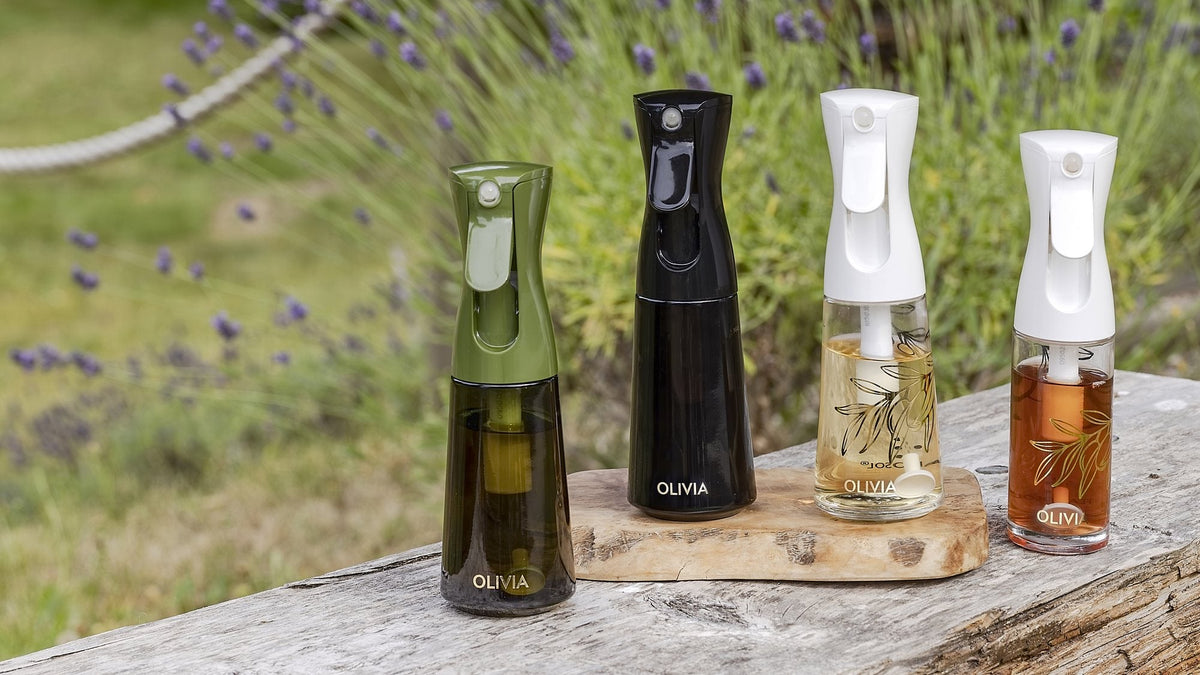
If you use two oils often, two bottles are simpler than constant switching. Label them, or pick different colors so you can tell olive oil from sesame at a glance.
Where to Keep the Bottle
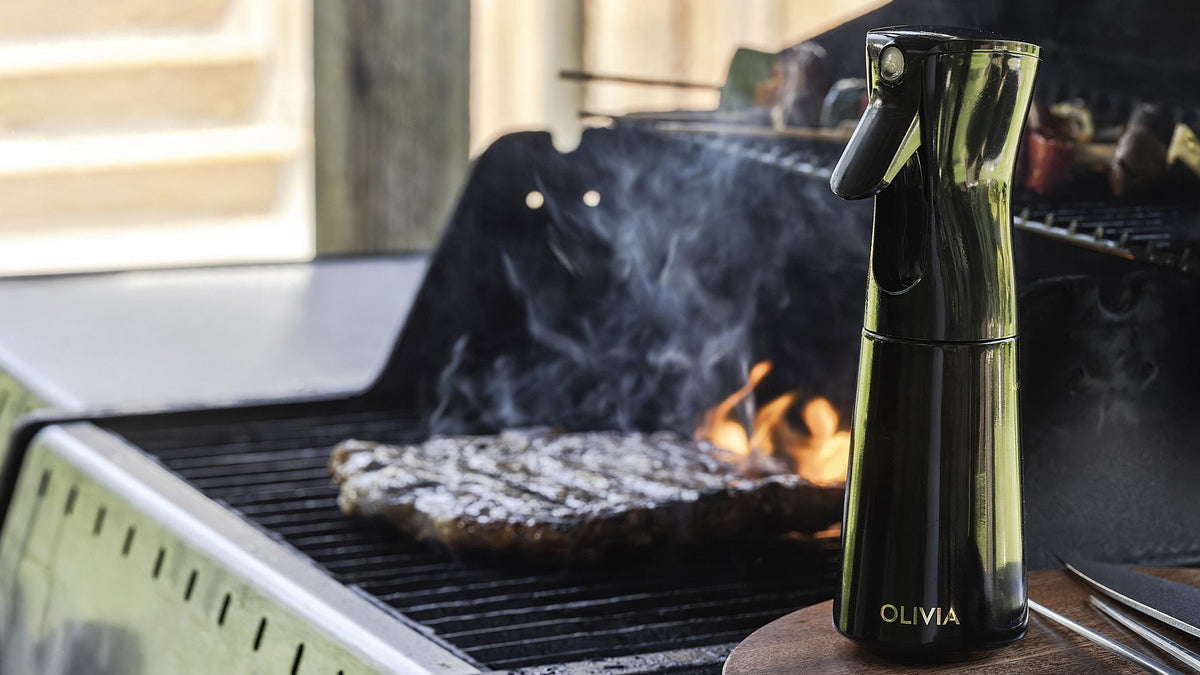
Whatever you fill it with, store the sprayer away from the stove and out of strong sun. Heat and light wear down the flavor of oil over time, and a warm bottle next to the burner is also more likely to get knocked into a hot pan. When you cook, spray the food or the pan off the heat, and never spray toward an open flame or a hot burner.

A glass bottle makes this easier, because you can see when the oil is running low or starting to look cloudy. We compared the options in glass vs. plastic olive oil spray bottles if you're still deciding.
A Second Bottle for Your Second Oil
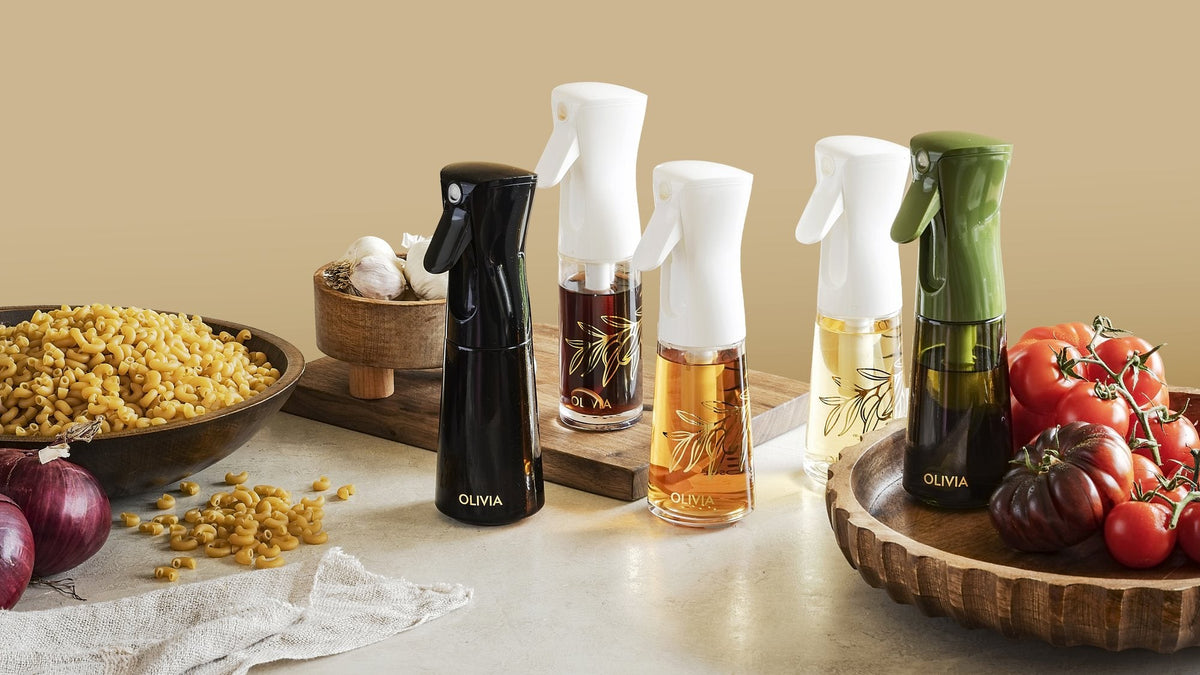
OLIVIA Signature is a refillable glass oil sprayer that you fill with your own oil, with no propellants or aerosol. The borosilicate glass bottle shows you exactly what's inside, and it sprays a fine, even mist.
It comes in 200 ml and 130 ml sizes. Many cooks keep the larger one for olive oil and a smaller one for vinegar, sesame or avocado oil. The 130 ml Golden Leaves sprayer is a compact fit for that second bottle.
Frequently Asked Questions
Can you put normal oil in a spray bottle?
Yes, if the bottle is made for cooking oil. Plain liquid oils such as olive, avocado, sunflower and canola work well in an oil sprayer. A cheap water mister usually can't build enough pressure to break oil into a fine mist.
Can you put olive oil in a spray bottle?
Yes. Both extra virgin and light olive oil spray well. Extra virgin is a little thicker, so keep the bottle at room temperature and use a full pull on the trigger.
Can you use avocado oil spray for baking?
Yes. Avocado oil is mild, so a light mist greases cake pans and muffin tins without adding much flavor. Spray right before you add the batter so the oil doesn't pool.
What oil spray is best for air fryer cooking?
A neutral oil that handles heat well, such as avocado or light olive oil, is a reliable choice. Extra virgin olive oil works too if you like its flavor. Keep the coat light and spray the food rather than the basket.
Can I put vinegar in my oil sprayer?
Yes. Thin vinegars like wine, cider and rice vinegar spray well. Rinse the bottle with warm water before you switch back to oil, or keep a separate bottle just for vinegar.
Start with the oil you cook with most, add a second bottle when you're ready, and the sprayer will cover far more of your cooking than you might expect.