Most sprayers don't fail all at once. The mist gets a little heavier, then it starts to spit, and one evening it fires a thin jet of oil across the pan. More often than not, the bottle isn't broken. It just needs a wash.
To clean an oil spray bottle, empty it, fill it about a third of the way with warm water and a drop of dish soap, shake, and spray that soapy water through the nozzle until it runs clear. Repeat with plain warm water, wash the bottle by hand, and let every part dry completely before you refill it. That simple routine takes about five minutes and fixes most sputtering.
Below you'll find how often to do it, a deeper clean for a nozzle that's truly blocked, and the few habits that keep a sprayer misting well for a long time.
Jump to:
- How often to clean it
- What you need
- The 5-minute rinse
- Deep cleaning a clogged nozzle
- Drying and reassembly
- What not to do
How Often Should You Clean an Oil Sprayer?
There's no single schedule that suits every kitchen, but a simple rhythm works well. A quick wipe takes seconds, a rinse takes minutes, and a deep clean is only needed now and then.
| When | What to do |
|---|---|
| Every refill | Wipe the threads, rim and nozzle tip with a paper towel |
| Every few weeks | Run the warm soapy rinse below |
| When you switch oils | Rinse so the old oil doesn't flavor the new one |
| When the spray turns heavy or spits | Rinse first, then deep clean if needed |
| Before storing it for a while | Empty, rinse and dry fully |
Oil left sitting in the bottle for months can turn stale and slightly sticky, which is exactly what slows a nozzle down. If you use your sprayer daily, you'll rarely need more than the routine rinse.
What You Need
You almost certainly have all of this already:
- Warm tap water (comfortably hot to the hand, not boiling)
- A mild dish soap
- A small bottle brush, or a soft cloth wrapped around a chopstick
- Baking soda, for bottles with a stale smell or cloudy film
- A small bowl for soaking the spray head
- Paper towels or a clean dish towel
Skip anything abrasive. Scouring pads can scratch glass, and pins or needles can widen the nozzle opening, which changes the spray pattern for good.

How to Clean an Oil Spray Bottle in 5 Minutes
This is the routine to come back to. It clears the light film that builds up inside the pump and tube, which is usually what makes the mist uneven.
- Empty the bottle. Pour any remaining oil into a small jar if it's still fresh, or discard it if it smells off.
- Add warm soapy water. Fill the bottle about a third full with warm water and a single drop of dish soap. More soap means more rinsing later.
- Close and shake. Screw the spray head back on and shake for a few seconds.
- Spray it through. Point the nozzle into the sink and pull the trigger fully, again and again, until the water comes out clean and the spray looks even. This pushes the soapy water through every part that touches oil.
- Rinse with plain water. Empty the bottle, refill with plain warm water and spray that through until there are no more bubbles.
- Wash the bottle. Take the head off and wash the inside of the bottle with the brush and a little soapy water, then rinse well.
If your spray was only slightly off before, try it again once everything is dry. A clean sprayer should go straight back to a fine, even mist.
Deep Cleaning a Clogged Nozzle
When the rinse doesn't fix things, oil has probably thickened inside the nozzle or the pump. Time and warmth do the work here, not force.
Soak the spray head
Fill a bowl with warm water and a drop of soap and stand the spray head in it so the dip tube and nozzle are submerged. Leave it for 15 to 20 minutes. Then put the head back on a bottle of clean warm water and pull the trigger repeatedly. You'll often see a cloudy puff come out first, followed by a clear spray.
Clean the nozzle tip
Wipe the outside of the nozzle with a damp cloth. If you can see dried oil on the tip, soften it with a warm, damp paper towel held against it for a minute, then wipe again. Avoid poking anything into the opening.
Use baking soda for the bottle
To clean an oil spray bottle with baking soda, add a teaspoon of it to the empty bottle with some warm water, swirl, and let it sit for 10 minutes before brushing and rinsing. It's good for lifting a greasy film or a stale smell from the glass. Keep the baking soda in the bottle itself and rinse the spray head with plain water afterwards, so no grains get into the pump.
If the spray still isn't right after a deep clean, the cause may be the fill level or cold, thick oil rather than dirt. This guide on why an oil sprayer turns into a stream walks through those other causes one by one.

Drying and Putting It Back Together
This step is easy to rush, and it matters more than it seems. Oil and water don't mix, so even a few drops of water left inside can make the first sprays sputter.
Stand the bottle upside down on a rack and lay the spray head on a towel. Give the trigger a few pulls with nothing in it to push out water trapped in the pump. Leave everything to air-dry, ideally overnight, before you refill.
When it's dry, add fresh oil up to the fill line, screw the head on hand-tight and pull the trigger a few times over the sink to prime it. If you'd like a refresher on the first fill and priming, our getting-started guide for the Olivia oil sprayer covers it step by step.
What Not to Do
A few well-meant habits cause more trouble than dirty oil ever does:
- Don't put the spray head in the dishwasher unless the maker says it's safe. Heat and strong detergent can be hard on small seals and springs. The glass bottle is usually the sturdier part, but check your instructions.
- Don't use boiling water. Warm water dissolves oil film just fine. Very hot water can stress plastic parts, and a sudden temperature change isn't kind to glass either.
- Don't poke the nozzle. A pin can scratch or widen the opening and turn a mist into a jet permanently.
- Don't store infused oil in it. Herbs, garlic and chili flakes leave particles that block the nozzle. Infuse in a jar, strain, and only then fill the sprayer.
- Don't keep it next to the stove. Heat speeds up how quickly oil goes stale. A cupboard or a spot on the counter away from the burners is better.
Cooking spray cans are a different story: they aren't designed to be opened or cleaned, and the residue they leave on pans comes from what's in the can. If you're curious about that difference, here's how an olive oil spray bottle compares with aerosol cooking spray.

A Sprayer That's Easy to Look After
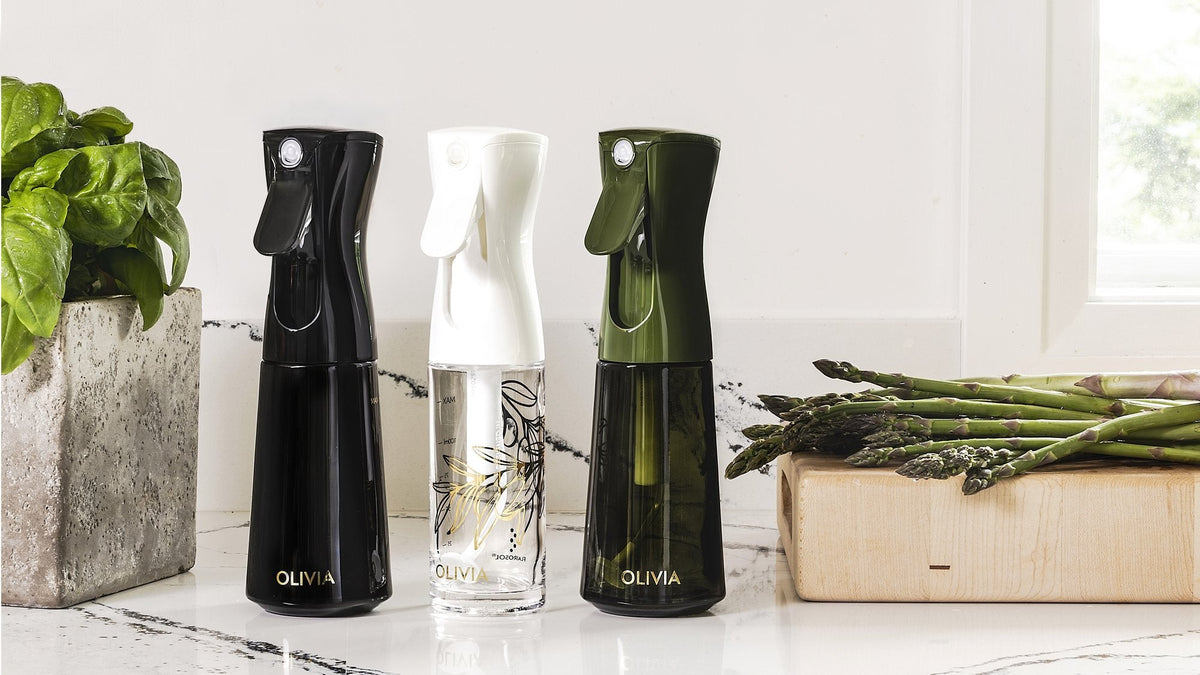
Cleaning is simpler when you can see what's going on. The OLIVIA Signature oil sprayer has a borosilicate glass bottle, so you can check the oil level and spot any cloudy film at a glance. It's refillable, with no propellants or aerosol, so the only thing inside is the oil you chose.
The spray head unscrews like a jar lid, which makes the rinse above quick, and a clean pump gives the fine, even mist it was designed for. If you like a darker bottle that hides fingerprints on the counter, the 200 ml OLIVIA sprayer in Black is a good everyday size.
Frequently Asked Questions
How do you clean an oil spray bottle with baking soda?
Add about a teaspoon of baking soda and some warm water to the empty bottle, swirl, and let it sit for 10 minutes. Brush the inside, rinse well, and rinse the spray head separately with plain warm water so no grains get into the pump.
How do you unclog an oil spray bottle?
Soak the spray head in warm, soapy water for 15 to 20 minutes, then spray clean warm water through it until the mist is even again. If it still sputters, check that the bottle isn't overfilled and that the oil isn't thick from a cold kitchen.
How do you clean the nozzle of an oil sprayer?
Wipe the tip with a warm, damp cloth to soften any dried oil, then spray warm soapy water and plain water through it. Don't push pins or needles into the opening, as that can change the spray pattern for good.
Why is my oil spray bottle not spraying?
The most common reasons are a pump that needs priming after the bottle ran empty, oil that has thickened in the nozzle, or water left inside after washing. Prime it with a few full pulls over the sink, and if that doesn't help, run the warm soapy rinse.
Can you reuse an oil spray bottle?
A refillable sprayer is made to be reused: just clean it every few weeks and whenever you switch oils. Disposable aerosol cans are a different product and aren't designed to be opened or refilled.
Five minutes of warm water every few weeks, and your sprayer will keep giving you the light, even coat you bought it for.