A new sprayer sits on the counter, the box is open, and the bottle is empty. You know you want a light coat of oil on tonight's vegetables, but the first question is a simple one: how does this thing actually open?
To get started with your Olivia oil sprayer, unscrew the spray head from the glass bottle, fill the bottle with your own oil up to the MAX line, screw the head back on firmly, and give the trigger a few full pulls over the sink until a fine mist comes out. That's it. After that first priming, every full pull of the trigger gives you an even layer of oil.
This guide walks through each step in a little more detail, then covers how to hold it, what to cook first, how to refill and clean it, and which size makes sense for your kitchen.
What's covered:
- How to open the Olivia oil sprayer
- First fill and priming
- How to hold it and spray
- Good first things to cook
- Refilling and cleaning
- 130 ml or 200 ml?
How to Open the Olivia Oil Sprayer
The sprayer has two parts: the glass bottle and the spray head with its trigger and long dip tube. Hold the bottle in one hand and turn the spray head counterclockwise with the other. It unscrews like a jar lid. Lift it straight up so the tube slides out without dripping on the counter.
If the head feels stuck the first time, don't force it at an angle. Grip the bottle lower down, closer to the base, and turn the head with a steady, even twist. A dry hand and a dry bottle make a big difference here, especially once there's a little oil on the threads.
Putting it back together
Lower the dip tube back into the bottle, keep the head straight, and turn it clockwise until it's snug. Hand-tight is enough. Over-tightening doesn't make it seal better and only makes it harder to open next time.

Olivia Oil Sprayer Instructions: First Fill and Priming
Before the first fill, rinse the bottle and run some warm water through the spray head, then let both parts dry completely. Water left inside can make the first few sprays sputter.
- Choose your oil. Extra virgin olive oil, light olive oil and avocado oil are all good everyday choices. Thin, smooth oils spray most easily.
- Use a small funnel if you have one. It keeps oil off the threads and the outside of the glass.
- Fill to the MAX line, not above it. The pump needs some air space at the top to build pressure.
- Wipe the rim and threads, then screw the spray head back on.
- Prime the pump. Point the nozzle into the sink and pull the trigger fully a few times. The first pulls draw oil up the tube. Once you see a steady mist, it's ready.
Keep the oils in the bottle free of herbs, garlic or chili flakes. Solid bits can block the nozzle, and plain oil keeps much better.
How to Hold It and Spray
The trigger is designed for a full, smooth pull. Squeeze it all the way back and let it return on its own. Short, half pulls give you less oil and a less even pattern, so it's better to do one complete pull than three little taps.
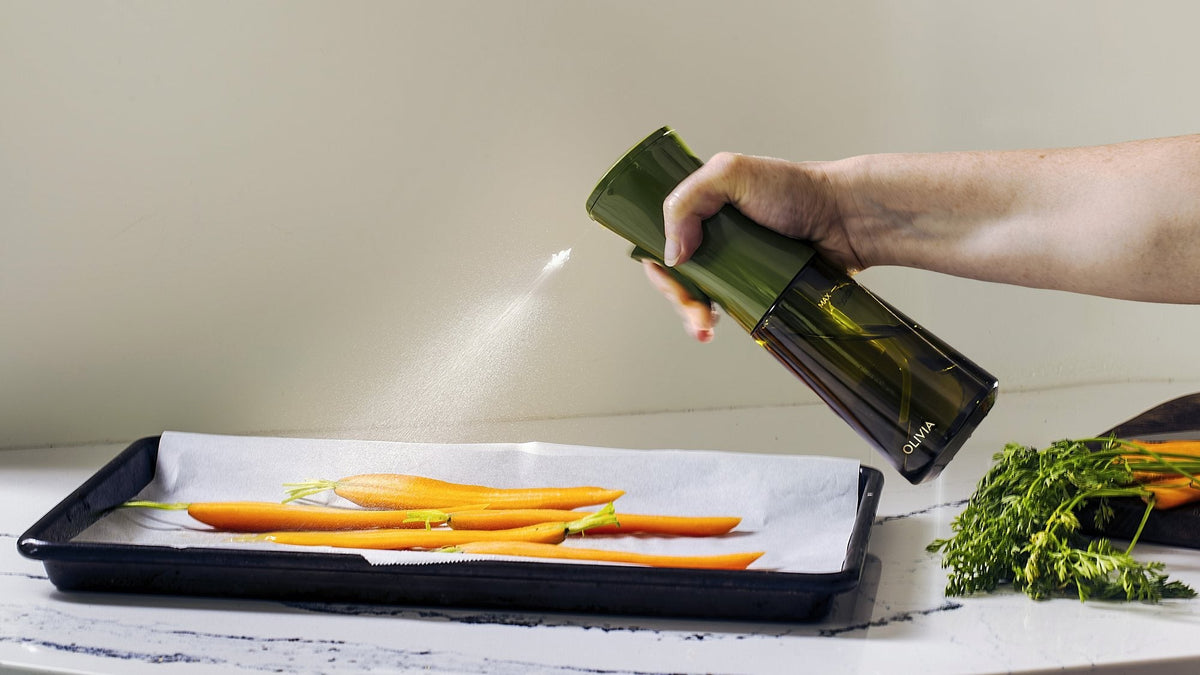
Hold the bottle upright or only slightly tilted, about 6 to 10 inches from the food. Closer than that and the oil lands in a small, concentrated spot. Further away and some of it drifts past the plate. Move your hand slowly across the tray as you spray, the same way you would with a can of spray paint, so the mist covers everything in one pass.

A few safety basics apply to any oil sprayer for cooking. Always spray food on a counter or prep tray, never toward an open flame, a lit grill or a hot burner. Oil mist is flammable, so keep the nozzle pointed away from the stove while you work.
Good First Things to Cook
The easiest way to get a feel for your new sprayer is to use it on food you already make every week. A few ideas to start with:
- Roasted vegetables. Spread them on a sheet pan, spray, toss, and give one more light pass. Seasoning sticks much better to an even coat.
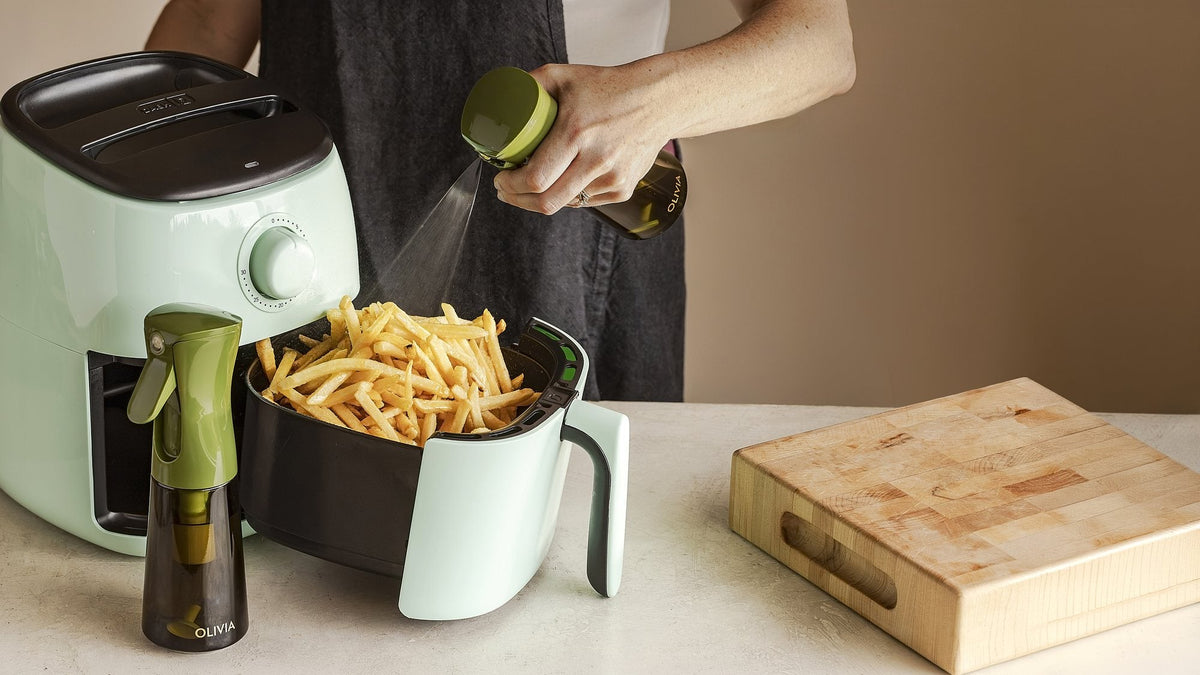
- Air fryer fries or wedges. Mist the food, not the empty basket. Our guide on using an olive oil sprayer in your air fryer covers timing and amounts.
- Eggs. One or two pulls on a cool pan, then heat it.
- Salad. Spray dry leaves, toss, add lemon or vinegar, and taste.
- Toast and croutons. A quick mist before the oven gives an even golden finish.

Once those feel natural, there are plenty more. Here are ten everyday ways to use an oil sprayer for cooking, from grilling prep to popcorn.
Refilling and Cleaning
When and how to refill
Refill when the oil level drops near the bottom of the dip tube. If you wait until it's completely empty, you'll need to prime the pump again. Unscrew the head, top up to the MAX line, wipe the threads and screw it back on. Refilling a little more often with a smaller amount also keeps the oil fresher.
Routine cleaning
Every few weeks, or whenever you switch oils, empty the bottle and fill it partly with warm water and a drop of dish soap. Spray that through the nozzle into the sink until it runs clear, then repeat with plain warm water. Wash the glass bottle by hand, and let everything dry fully before refilling. Check the instructions that came with your bottle before putting any part in the dishwasher.
If the spray turns into a stream
A sputter or stream usually means one of three things: the bottle is overfilled, the oil has thickened in a cold kitchen, or the nozzle needs a warm-water flush. Pour out a little oil, let the bottle sit at room temperature, or run the cleaning routine above. One of those usually sorts it out.
If it still won't mist, here's a fuller look at why an oil sprayer turns into a stream and how to get a fine mist again.
130 ml or 200 ml: Which Size Suits Your Kitchen?
Both sizes use the same borosilicate glass and the same spray head, so the choice comes down to how much oil you go through and where the bottle will live.
| 130 ml | 200 ml | |
|---|---|---|
| Best for | Small households, finishing oil, vinegar | Daily cooking, air frying, larger families |
| Refills | More often, so the oil stays fresh | Less often |
| Footprint | Fits a narrow shelf or tray | A little taller, still slim on the counter |
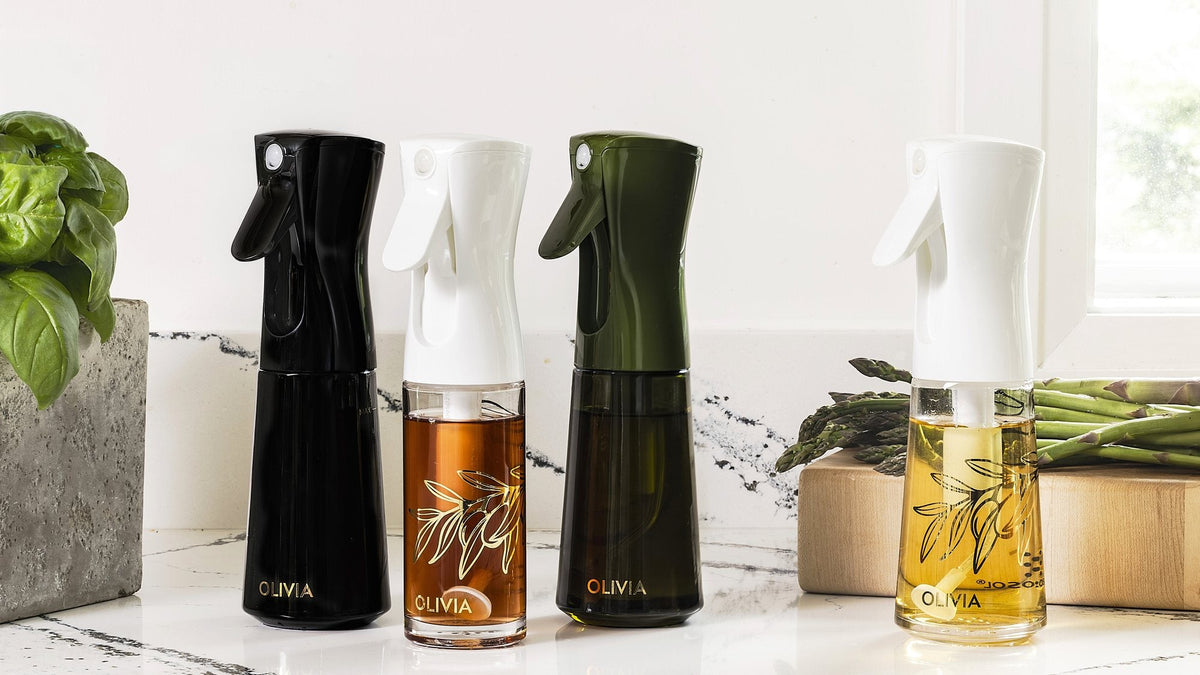
A handy setup is two bottles: a 200 ml bottle for everyday olive oil and a smaller one for a second oil or vinegar. Colors come in Olive Green, Golden Leaves and Black, which also makes it easy to tell two bottles apart at a glance.
Not sure whether you need a sprayer, a pourer, or both? Our guide to choosing the right oil dispenser for your kitchen walks through the options.
A Mist That Stays Even From Start to Finish
The Olivia oil sprayer was made for exactly this kind of everyday use. It's a refillable glass olive oil spray bottle with no propellants or aerosol, so what comes out is just the oil you put in. The pump builds pressure before it sprays, which gives a fine, even mist instead of drops or a jet.
If you'd like a second bottle for vinegar or a different oil, the 130 ml Golden Leaves sprayer is a handy companion to a larger one.
Frequently Asked Questions
How do you open the Olivia olive oil sprayer?
Hold the glass bottle near the base and turn the spray head counterclockwise until it comes off, then lift it straight up. To close it, lower the tube back in and turn the head clockwise until it is hand-tight.
How do you refill an olive oil spray bottle?
Unscrew the spray head, pour oil in with a small funnel up to the MAX line, and wipe the threads before closing. If the bottle ran completely empty, give the trigger a few full pulls over the sink to prime it again.
How do you clean an olive oil sprayer?
Empty it, add warm water with a drop of dish soap, and spray it through the nozzle until it runs clear. Repeat with plain warm water, wash the bottle by hand and let everything dry before refilling.
How do you unclog an olive oil sprayer?
Spray warm, soapy water through the nozzle, then plain warm water, until the mist comes back. If your kitchen is cold, let the oil warm to room temperature first, since thick oil sprays poorly.
Can you spray olive oil directly on food?
Yes. Spraying the food itself, rather than the pan, gives the most even coat and helps seasoning stick. Always spray away from open flames and hot burners.
Fill it, prime it once, and your new sprayer is ready for tonight's dinner.