You press the trigger expecting a soft cloud over your vegetables, and instead a thin jet of oil lands in one greasy line. Or the bottle sputters, drips from the nozzle and gives up halfway through the tray. If that sounds familiar, you are not alone. It is one of the most common frustrations with an oil sprayer.
The good news: an oil sprayer that streams instead of misting is usually clogged, overfilled, or being pumped too gently. A warm-water flush through the nozzle, the right fill level and a full, quick pull on the trigger fix most cases in a few minutes.
Below you will find what is actually going on inside the bottle, how to work out which problem you have, and how to keep the mist fine from one week to the next.
What's covered:
- What turns a mist into a stream
- Five common causes, and their fixes
- How to clean an oil sprayer nozzle
- Still not working after cleaning?
- Habits that keep the spray fine
What Turns a Mist Into a Stream
A mist only happens when oil is pushed through a very small opening with enough force to break it into tiny droplets. The bottle is just a container. The pump, the valve and the nozzle tip do all the real work.
Anything that lowers that force or narrows that opening unevenly changes the pattern. A partly blocked nozzle bends the spray into a jet. A weak or half-finished pull leaves too little pressure, so the oil dribbles out instead of breaking apart. Thick or cold oil resists being split into droplets at all.

That is why the difference matters at the stove. A fine mist settles evenly across a whole tray, while a stream puts most of the oil in one place and leaves the rest dry, which is the very thing a sprayer is meant to avoid.
Oil Sprayer Not Working? Five Common Causes
Most problems fall into one of these five. Start with the one that matches what you see.
| What you see | Likely cause | What to do |
|---|---|---|
| A thin jet instead of a cloud | Dried oil narrowing the nozzle | Flush with warm, soapy water (steps below) |
| Sputtering, spitting or air bursts | Bottle filled past the max line, or the dip tube is out of the oil | Pour a little out, check the tube sits in the oil |
| Drips from the nozzle, weak spray | Trigger pulled slowly or only halfway | Use one full, quick pull each time |
| Nothing comes out after a few sprays | Oil too thick or too cold | Let it reach room temperature, or switch oils |
| Spray works, then blocks again within days | Bits of herbs, garlic or sediment in the oil | Use plain, filtered oil only |
Overfilling is easy to miss
Many refillable sprayers need a little air space at the top to work properly. If you fill right to the neck, the pump has nothing to push against and the spray turns erratic. Stay at or below the fill line marked on the bottle.
Your oil choice matters more than you think
Thin, filtered oils mist best. Extra virgin olive oil, avocado oil and other everyday cooking oils are usually fine at room temperature. An olive oil sprayer kept next to a cold window in winter, or in the fridge, can thicken enough to stop misting. Homemade infused oils are the most common cause of repeat clogs, because tiny pieces of herb or garlic lodge in the nozzle.
How to Clean an Oil Sprayer Nozzle
This takes about ten minutes, and it is worth doing whenever the spray pattern starts to change, not only when it stops completely.
- Empty the bottle. Pour the oil back into its original container, or into a jar if you plan to reuse it.
- Fill with warm, soapy water. Use warm tap water and a drop of dish soap, about halfway up the bottle.
- Spray it through. Screw the top back on and spray into the sink 15 to 20 times. This pushes soapy water through the pump and nozzle, where the dried oil sits.
- Soak the top if needed. If the spray is still uneven, remove the pump and let it sit in a bowl of warm, soapy water for 10 minutes, then spray again.
- Rinse with plain water. Refill with clean warm water and spray until no suds come out.
- Dry completely. Leave the bottle and pump apart to air dry. Water left inside will mix with fresh oil and can make it sputter.
Avoid poking the nozzle with a pin or toothpick. It can scratch or widen the opening, and a damaged opening will never give an even mist again. If you have a glass bottle, a bottle brush is fine for the inside of the glass itself. For a fuller routine, including how often to do it and a baking soda soak, see our step-by-step guide on how to clean an oil spray bottle.
Still Not Working After Cleaning?
If the oil spray bottle still streams after a proper flush, check these before giving up on it:
- Prime it again. After cleaning, a sprayer often needs several pulls before oil reaches the nozzle. Spray into the sink until the pattern settles.
- Check the seal. If the top is cross-threaded or loose, air leaks in and the pump cannot build pressure.
- Look at the dip tube. It should reach the bottom and sit straight. A tube that has slipped off or bent will pull air instead of oil.
- Consider the design. Some sprayers rely on a simple trigger with no pressure build-up and will always spray more of a jet than a mist, no matter how clean they are.
For that last point, it helps to know what to look for. Our guide on how to choose the right oil dispenser for your kitchen walks through the differences between pourers, pump misters and continuous sprayers.
Habits That Keep the Spray Fine
A few small routines prevent most of the problems above.

- Pull the trigger all the way, quickly. A firm, complete pull gives the cleanest mist. Slow half-pulls are the main cause of drips at the nozzle.
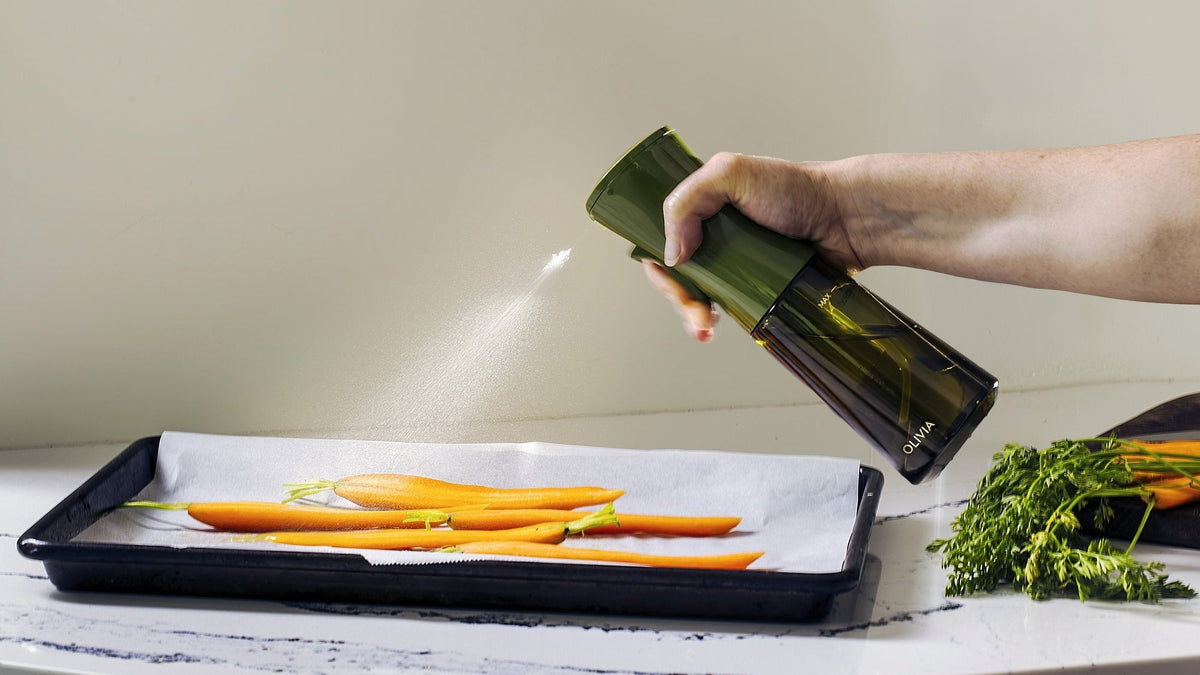
- Hold it upright and at a short distance. Around 6 to 8 inches above the food lets the mist spread before it lands.
- Use it often. Oil that sits in the nozzle for weeks can turn sticky. If you only cook with it now and then, give it a few test sprays into the sink first.
- Flush it every few weeks. A quick warm-water rinse through the pump before the spray changes is easier than fixing a full clog.
- Store it away from the stove. Heat speeds up how quickly oil goes stale and gummy.
- Spray before the heat goes on. Mist a cool pan or the food on your prep board, and never spray toward an open flame or a hot burner.
If you are still finding your rhythm with a sprayer, these ten everyday ways to use an oil sprayer for cooking are a good place to practise, from roasting vegetables to greasing a muffin tin.
A Sprayer Built Around the Mist
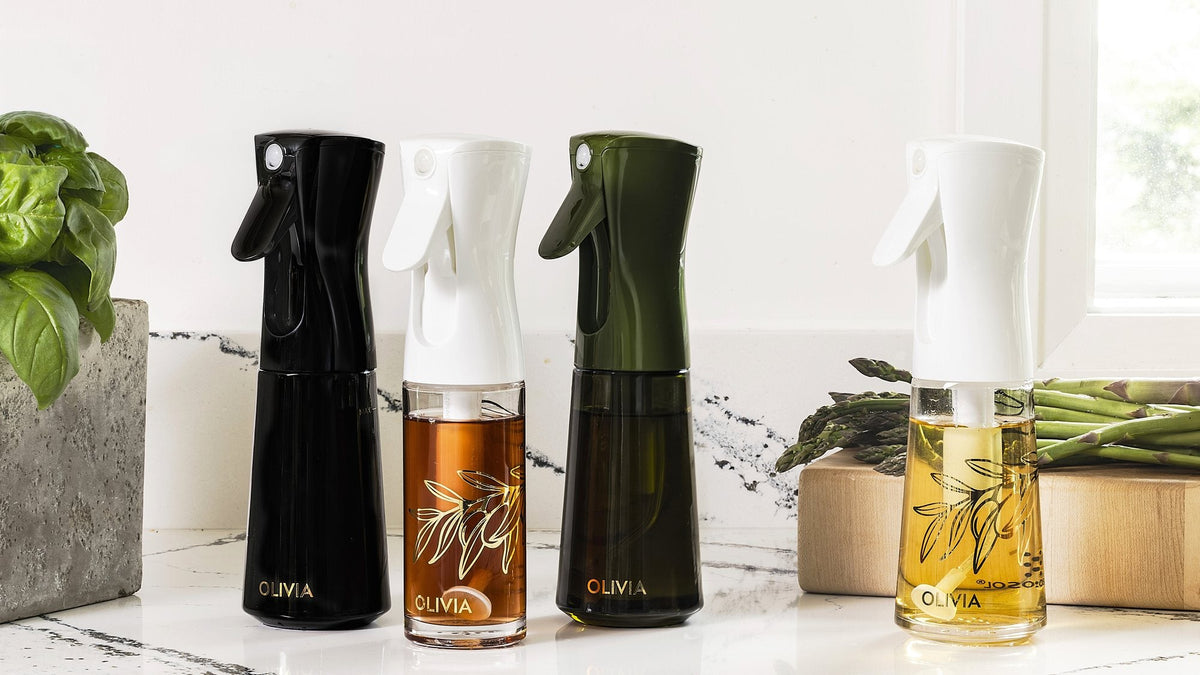
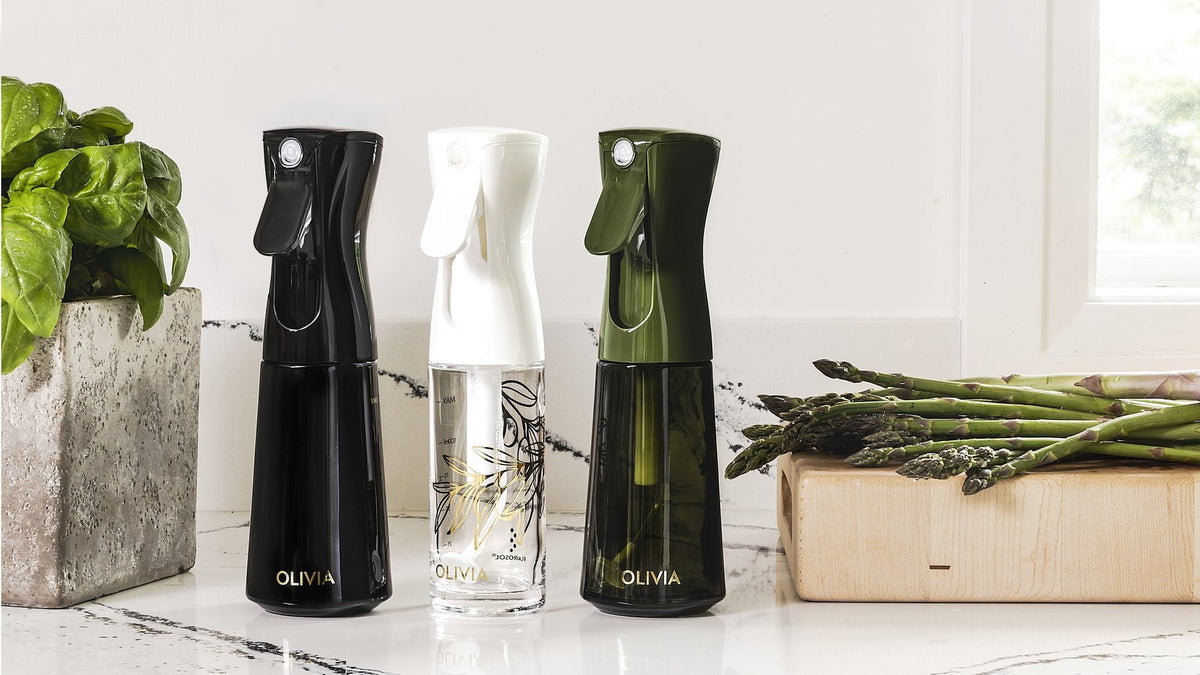
If your current bottle is past saving, it is worth choosing one where the mechanism is the point, not an afterthought. OLIVIA Signature uses a pump that builds pressure before it sprays, so each pull gives a fine, even mist rather than a squirt.

The bottle is borosilicate glass, which is easy to rinse and lets you see how much oil is left. There are no propellants or aerosol, and you fill it with your own oil. It comes in 130 ml and 200 ml sizes. The 130 ml Golden Leaves sprayer is a compact choice if you want one bottle by the stove and another for the table. New owners can find filling and priming tips in the Olivia oil sprayer guide.
Frequently Asked Questions
Why is my oil spray bottle not spraying?
The most common reasons are a nozzle narrowed by dried oil, a bottle filled past its max line, or oil that has thickened in the cold. Flush the pump with warm, soapy water, pour out a little oil if it is overfilled, and let the bottle come to room temperature before trying again.
How do you clean an oil sprayer nozzle?
Empty the oil, fill the bottle halfway with warm water and a drop of dish soap, then spray it through into the sink 15 to 20 times. Rinse by spraying clean water through, and let every part dry completely before refilling. Avoid poking the opening with a pin, since that can damage it.
How do you fix an oil spray bottle that won't spray?
Start by checking that the top is screwed on straight and the dip tube reaches the oil. Then clean the nozzle with a warm, soapy flush and prime it with several full pulls into the sink. If it still only drips or squirts, the pump itself may be worn out.
Why is my avocado oil spray not spraying?
Avocado oil is fairly thin, so the cause is usually the sprayer rather than the oil. Dried residue in the nozzle, a cold kitchen or an overfilled bottle are the usual suspects. A warm-water flush and a full, quick trigger pull fix it in most cases.
Can I use a spray bottle for oil?
A regular household spray bottle is not designed for oil and will usually squirt or clog, because oil is much thicker than water. A sprayer made for cooking oil has a pump and nozzle sized to break oil into a fine mist, and food-safe materials that are easy to clean.
Give your sprayer a warm rinse, a sensible fill and a confident pull, and most of the time the mist comes right back.