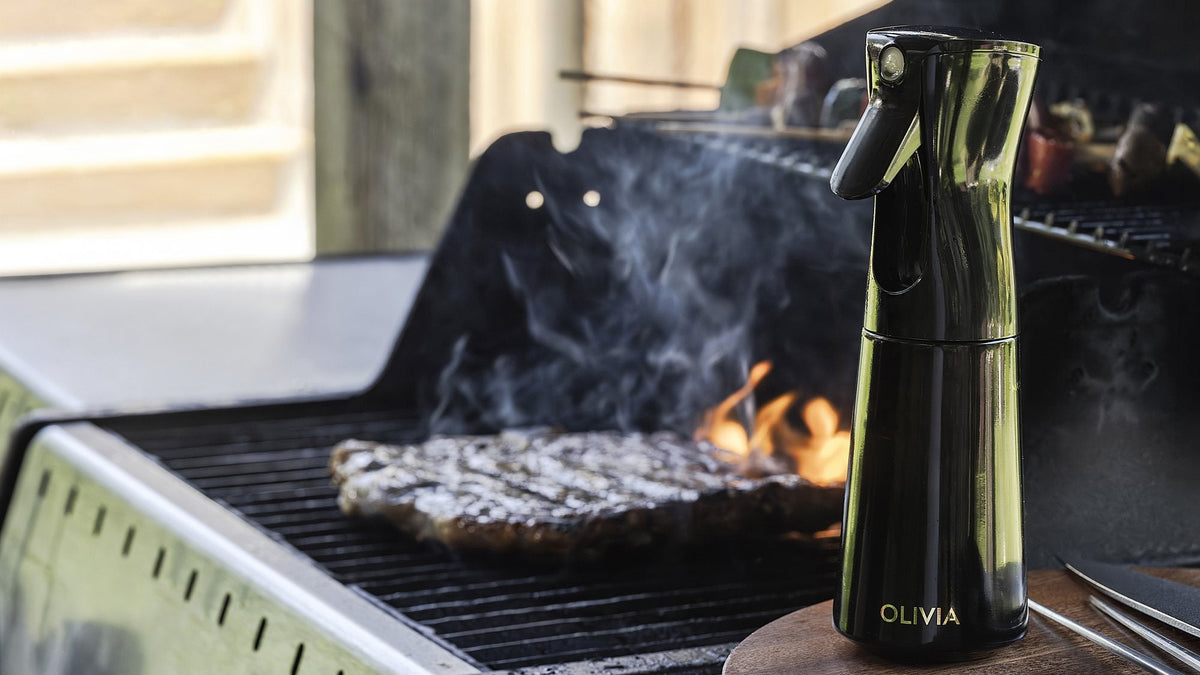
A grill does its best work on food that's dry on the surface and lightly coated in oil. Too little and the skewers stick. Too much and the oil drips into the fire, flares up and leaves a sooty taste behind.
An oil sprayer for cooking solves that in a simple way: you mist the food, not the grill. Spray vegetables, skewers, fish and fruit on a tray at the counter, season them, then carry them out. The fire stays clean and the coating stays even.
Here's how to do it for the things people grill most, from bell peppers to a late-summer pan of peaches.
What's covered:
- Using an oil sprayer for cooking on the grill
- Which oil to put in the sprayer
- Skewers that don't stick
- Grilled vegetables and corn
- Fish, chicken and steak
- Grilled peaches for dessert
Using an Oil Sprayer for Cooking on the Grill
The one rule that matters most: spray the food, not the grill. Never spray toward an open flame, a lit burner or hot coals. A fine mist of oil is exactly the kind of thing that catches, and it can flare back toward your hand.
Set up a small prep station instead. A sheet pan or a large plate, your oil sprayer, salt, pepper and whatever seasoning you're using. Lay the food out in one layer, spray the top, season, flip with tongs and repeat. Then take the whole tray out to the grill.
A few habits help:
- Dry first. Pat vegetables, fish and chicken with paper towels. Oil won't cling to a wet surface, and wet food steams instead of searing.
- Spray from about 6 to 8 inches away. Close up you get puddles. Farther back the mist spreads into an even layer.
- Season after the oil. Salt, pepper and spice rubs stick to a light film of oil far better than to bare food.
- Keep the bottle off the grill shelf. Store it in the shade on the prep table, not next to the lid where it heats up.
If you'd rather oil the grates as well, do it before you light the grill, or with a folded paper towel held in long tongs once it's hot. Don't reach for the sprayer at that point.
Which Oil to Put in the Sprayer
For most backyard grilling, regular extra virgin olive oil is a fine choice. Vegetables, chicken, fish and fruit usually cook over medium to medium-high heat, and the olive oil adds flavor you'll actually taste.
If you like to sear steaks or burgers over the hottest part of the grill, a lighter oil handles the heat better. Light olive oil, avocado oil and canola oil all spray well and stay neutral in flavor. Some people keep two bottles: one with extra virgin for vegetables and finishing, one with a neutral oil for high heat. For a fuller rundown, see which oils you can use in an oil sprayer.
Skip infused oils with garlic or chili bits in them. Those bits clog the nozzle, and you can add the same flavors with a dry rub instead.
Skewers That Don't Stick
Skewers are where an olive oil sprayer really earns its spot on the prep table. Brushing oil onto a dozen kebabs takes time and tends to knock pieces loose. A mist reaches between the chunks and coats every side with a couple of turns.

- If you're using wooden skewers, soak them in water for about 30 minutes so they don't burn through.
- Cut everything to roughly the same size so it cooks evenly. Peppers, red onion, zucchini, mushrooms and cherry tomatoes all work well together.
- Thread the pieces with a little space between them. Packed too tight, the middle steams.
- Lay the skewers on a tray and spray lightly on all sides, turning them once or twice.
- Season, then grill over medium-high heat, turning every few minutes, until the edges char and the vegetables are tender. Most vegetable skewers take about 8 to 12 minutes.
For a recipe to try this weekend, our honey mustard glazed vegetable kabobs use the same method with a sticky glaze brushed on at the end.
Grilled Vegetables and Corn
Larger pieces of vegetable go straight on the grates, so they need an even coat on both sides. Slice zucchini and eggplant lengthwise about half an inch thick, cut peppers into wide flat pieces and halve small onions through the root so they hold together.
Corn on the cob
Husk the corn, then mist each cob lightly while turning it in your hand. A sprinkle of salt, chili powder or smoked paprika sticks right away. Grill over medium heat, turning every couple of minutes, for about 10 to 15 minutes until the kernels are tender with some dark spots.

Asparagus, broccolini and green beans
Thin vegetables can fall through the grates, so use a grill basket or lay them across the bars. Spray them in the basket while it's still on the counter, toss, and spray once more. It's the same idea as tossing a tray of vegetables for the oven, just with more smoke and char.
When the vegetables come off the grill, a quick final mist from your oil sprayer for cooking, filled with extra virgin olive oil, and a squeeze of lemon brings back some of the fresh olive oil flavor that high heat takes away.
Fish, Chicken and Steak
Protein is where sticking hurts the most, especially delicate fish.
| Food | Prep with the sprayer | Grill tip |
|---|---|---|
| Salmon or firm white fish | Pat very dry, spray both sides well, season | Place skin side down and don't move it until it releases on its own |
| Chicken thighs or breasts | Spray, then add a dry rub | Medium heat, cook through to 165°F inside |
| Steak | Light coat of a neutral oil, salt generously | Hot zone to sear, then move to the cooler side if needed |
| Shrimp | Thread on skewers, spray, season | A couple of minutes per side, until pink and opaque |
For marinated meat, you often don't need extra oil at all. Wipe off the excess marinade, since that is what drips and flares, and give the surface only a light mist if it looks dry.
Grilled Peaches for Dessert
Once dinner is off the grill, the grates are still hot and perfect for fruit. Grilled peaches take about 10 minutes and need almost nothing.

Serves 4. Prep 5 minutes, grill 6 to 8 minutes.
- 4 ripe but firm peaches
- Light olive oil or a mild extra virgin olive oil in your sprayer
- A pinch of salt and a little cinnamon (optional)
- Greek yogurt or vanilla ice cream, honey and fresh mint to serve
- Halve the peaches and twist out the pits.
- On a plate away from the grill, mist the cut sides lightly. Add a tiny pinch of salt and cinnamon if you like.
- Place them cut side down over medium heat and leave them alone for 4 to 5 minutes, until they have clear grill marks.
- Flip and cook another 2 to 3 minutes, until just soft.
- Serve warm with yogurt or ice cream, a drizzle of honey and torn mint.
Nectarines, plums and thick pineapple slices work the same way.
A Sprayer That Lives on the Prep Table
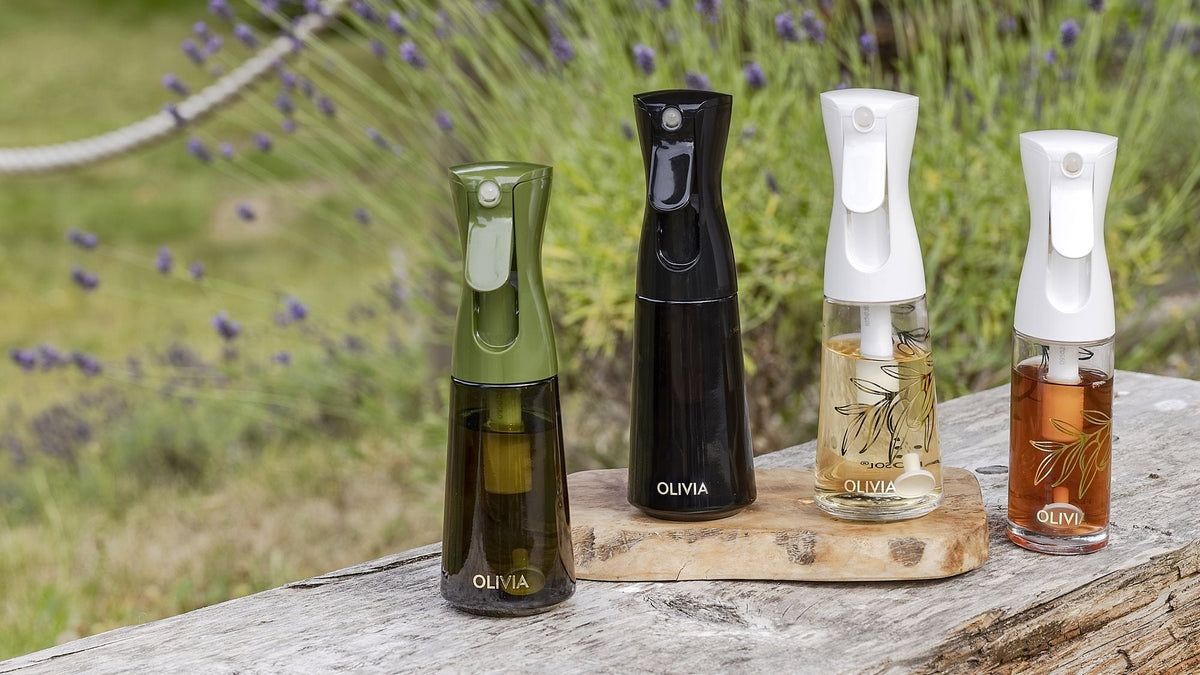
Grilling is mostly about what you do before the food hits the fire, and a good oil sprayer for cooking makes that part quicker. OLIVIA Signature is a refillable glass sprayer with a borosilicate glass bottle that you fill with your own oil. It sprays a fine, even mist with no propellants, so you can coat a tray of skewers in a few passes.
The 200 ml OLIVIA oil sprayer in Black holds enough for a full cookout. If the mist starts to sputter after a summer of use, here's how to clean an oil spray bottle so it sprays evenly again.
Frequently Asked Questions
Can you spray oil on a hot grill?
It's not a good idea. Oil mist that drifts into the firebox or onto burners can flare up quickly. Spray the food on a tray away from the grill instead, or turn the grill off and let it cool before oiling the grates with a folded paper towel and tongs.
Should you oil the grill grates or the food?
For most home grilling, oil the food. A light, even coat on the surface of vegetables, fish or meat helps with release and browning, and it keeps the oil where you want it instead of dripping into the fire.
Can you grill with olive oil?
Yes. Extra virgin olive oil works well for vegetables, fish, chicken and fruit cooked over medium to medium-high heat. If you like to sear over very high heat, a light olive oil or avocado oil handles that better and tastes more neutral.
What oil is best for grilling?
Any plain liquid oil you enjoy the taste of will do. Extra virgin olive oil adds flavor to vegetables and fish, while light olive oil, avocado or canola oil are good choices for hotter, faster cooking.
Can you use olive oil spray for grilled cheese?
You can. Mist the outside of both slices of bread lightly instead of buttering them, then cook in a pan over medium heat until golden. You get an even, thin layer that browns well and tastes of olive oil rather than butter.
Prep on the tray, keep the flame for the food, and the grill will do the rest.