Most of the oil that gets wasted with a sprayer never reaches the food. It lands on the counter, coats the side of the pan, or drips down the bottle because of a few small habits that are easy to slip into.
The fix is simple: spray from a short distance onto the food itself, keep the bottle half to two-thirds full, use oil at room temperature, and rinse the nozzle now and then. Get those right and an oil spray bottle puts a thin, even layer exactly where you want it, with far less oil than a pour.
Here are the mistakes we see most often, why each one wastes oil, and what to do instead.
Jump to:
- Spraying from too close
- Spraying the pan instead of the food
- Overfilling the bottle
- Using cold, thick oil
- Skipping the rinse
- Keeping it next to the stove
- Putting it all together
Spraying From Too Close
It feels natural to hold the nozzle right over the food, but a mist needs room to open up. From two or three inches away, the spray hits in a tight, heavy circle. One spot gets soaked and the rest stays dry, so you end up spraying again to cover the gaps.
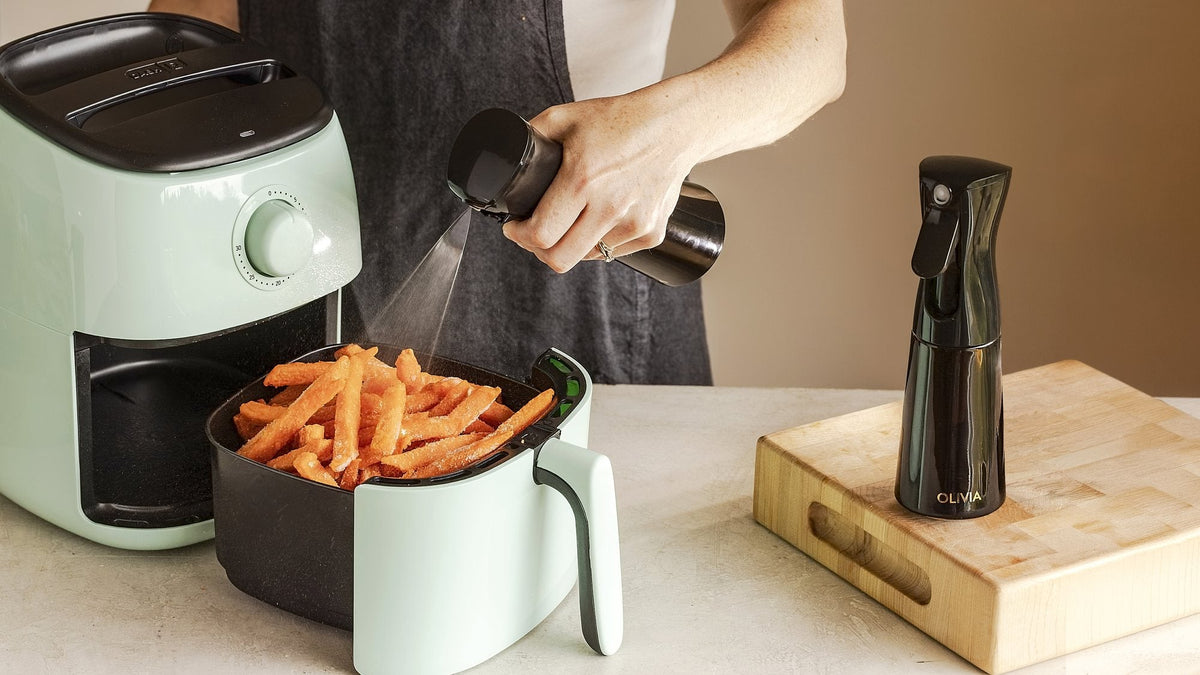
Hold the bottle about 6 to 8 inches from the food and move it as you spray, a little like spray-painting. The mist spreads into a wider, lighter cone, and a couple of passes cover a whole tray. If you notice glossy puddles forming, you're either too close or staying in one place too long.
Spraying the Pan Instead of the Food
A lot of oil goes onto empty parts of the pan, where it does nothing except smoke or burn. This is especially true with a wide skillet or a sheet pan that's only half full.
For roasting, air frying and grilling, mist the food rather than the surface it sits on. Toss vegetables in a bowl, spray, toss again and spray once more, then spread them out. Every piece gets a coat, and none of it is left behind on bare metal.
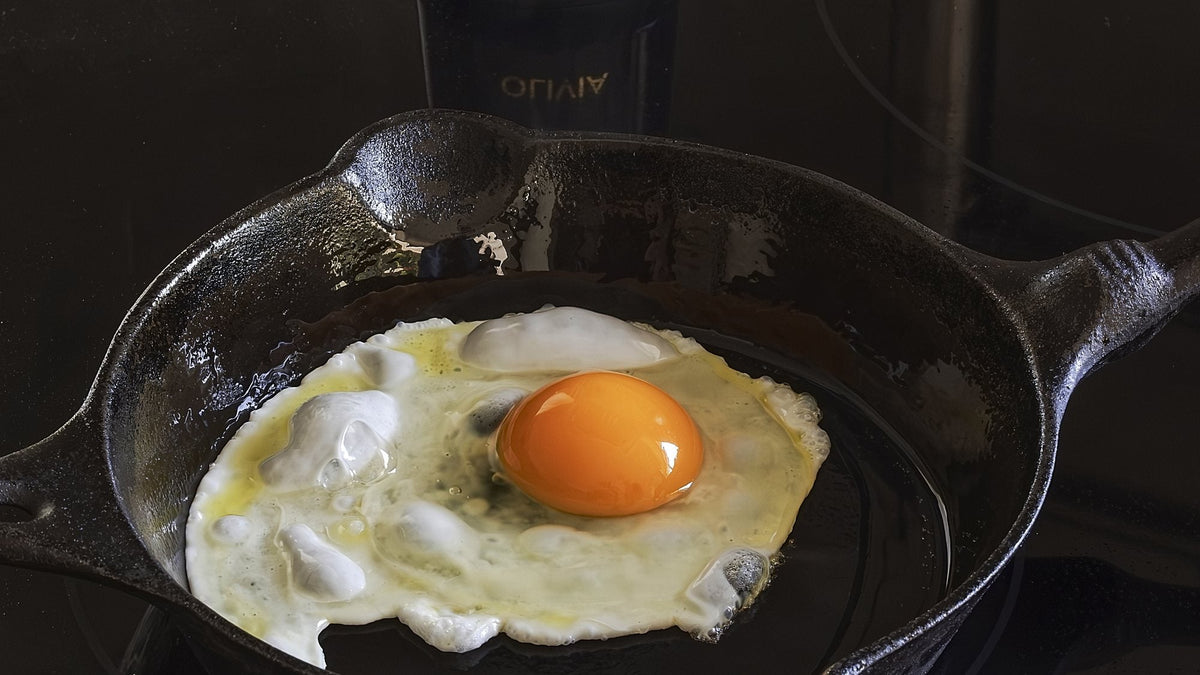
There are times when you do want oil on the pan, like frying an egg or greasing a muffin tin. In those cases, a short, even pass over the cooking area is plenty. You don't need to cover the sides or the rim.

Safety first at the stove
Spray before the pan goes on the heat, or take the pan off the burner first. Never spray toward an open flame, a hot burner or a grill that's already lit. With an oven tray, pull it out and set it on a heatproof surface before you add more oil.
Overfilling the Bottle
Filling right to the neck seems efficient, but it usually backfires. Most pump sprayers need a pocket of air above the oil to build pressure. Without that space, the spray can come out weak or uneven, and oil is more likely to seep around the cap when you screw it on.
A good rule is to fill the bottle no more than about two-thirds full, or to the fill line if yours has one. Use a small funnel so oil doesn't run down the outside, and wipe the threads before closing it. Our guide on how to refill an olive oil sprayer without the mess walks through it step by step.
Using Cold, Thick Oil
Oil that has been sitting in a cold pantry or near a drafty window thickens. Thick oil doesn't break into a fine mist. It sputters, spits big drops or comes out as a stream, which means more oil on the food than you meant to use.
Keep the bottle at room temperature, and if the oil looks cloudy, let it warm up on the counter before you cook. Very thick or unfiltered oils can be harder to mist, so a smooth, filtered oil tends to work best. If you're unsure what to put in yours, here's a rundown of which oils you can use in an oil sprayer.

Skipping the Rinse
Old oil slowly turns sticky inside the nozzle. Over time it narrows the opening, and the fine mist turns into a jet or a drip. Many people blame the sprayer at this point, when it only needs a clean.
Every few weeks, or whenever you switch oils, empty the bottle and pump warm, soapy water through the nozzle, then rinse with clean warm water and let everything dry fully. The full routine is in our guide on how to clean an oil spray bottle, and if yours is already streaming, these fixes for an oil sprayer that won't mist usually bring it back.
Keeping It Next to the Stove
The spot right beside the burners is convenient, but it's also the warmest place in the kitchen. Heat and light make oil go stale faster, so you end up throwing out a half-used bottle that tastes flat.
Store your sprayer a little farther away, out of direct sun, and keep only as much oil in it as you'll use in a few weeks. The rest can stay sealed in its original bottle in a cool, dark cupboard. For more on this, see how to store olive oil so it stays fresh.

How to Use an Oil Spray Bottle the Right Way
Putting it all together, here's a routine that keeps waste low and coverage even:
- Fill the bottle about two-thirds full with oil at room temperature.
- Close the cap firmly and wipe off any drips on the outside.
- Give it a test pump or two over the sink if it hasn't been used for a while.
- Hold it 6 to 8 inches from the food and keep your hand moving.
- Spray the food, toss or flip it, and spray again where it looks dry.
- Keep the bottle away from the heat while you cook, and put it back somewhere cool afterward.
That's really all there is to it. After a week or two it becomes a habit, and you'll notice how long one fill lasts.
A Bottle That Keeps Misting
Good habits matter, but so does the sprayer. OLIVIA Signature is a refillable glass oil sprayer with a borosilicate glass bottle and a pump that builds pressure before it sprays, so each pull gives a fine, even mist instead of a squirt. There are no propellants or aerosol, and you fill it with your own oil.
It comes in 130 ml and 200 ml sizes, in Olive Green, Golden Leaves and Black. The 200 ml Olive Green olive oil spray bottle is a good everyday size for a kitchen that cooks most nights.
Frequently Asked Questions
Can you put oil in any spray bottle?
Not really. A regular plastic spray bottle made for water usually can't atomize oil, so it squirts or drips instead of misting. A sprayer built for cooking oil handles the thicker liquid and gives a much finer spray.
Why is my oil spray bottle not spraying?
The usual causes are a clogged nozzle, oil that is too cold and thick, or a bottle filled too high. Rinse the nozzle with warm, soapy water, let the oil come to room temperature and leave some air space at the top.
How do you use an oil spray bottle for cooking?
Hold it about 6 to 8 inches from the food and move your hand as you spray. Mist the food rather than the empty pan, toss or flip, and add a second light pass where it looks dry.
Can you put olive oil in a spray bottle?
Yes. Olive oil works well in a sprayer made for cooking oil. Keep it at room temperature so it stays thin enough to mist, and clean the nozzle every few weeks.
Can you refill an oil spray bottle?
A refillable sprayer is designed to be topped up with your own oil. Fill it about two-thirds full with a small funnel and wipe the threads before closing the cap.
Small changes in how you hold, fill and store the bottle add up quickly, so the oil ends up on your food and not on the counter.