Refilling a sprayer sounds like a ten-second job, and most of the time it is. But a rushed refill is behind a lot of the small annoyances people blame on the bottle itself: an oily ring on the counter, a slick bottle that slips in your hand, or a sprayer that suddenly shoots a stream instead of a mist.
To refill an olive oil sprayer cleanly, unscrew the top over a sink or tray, pour room-temperature oil through a small funnel until the bottle is about three-quarters full, then wipe the threads dry before you screw the top back on. Give it a few test pumps into the sink and it's ready for the pan.
The details below cover what to keep on hand, how full to go, how to get the mist back after a refill, and when a bottle needs a wash rather than a top-up.
Jump to:
- What you need before you start
- How to refill an olive oil sprayer, step by step
- How full should it be?
- Getting the mist back after a refill
- How often to refill, and when to wash instead
- Switching oils between refills
What You Need Before You Start
You don't need special equipment, but having a few things within reach is the difference between a clean refill and a sticky one.
- A small funnel. A narrow kitchen funnel that fits inside the bottle's neck is the single most useful tool here. Pouring straight from a big oil bottle almost always ends with a drip running down the outside.
- Your oil, at room temperature. Oil that has been sitting somewhere cold pours slowly and can look cloudy. Let it warm up on the counter first.
- A paper towel or a clean cloth. For the threads, the neck and any drips.
- A sink, tray or plate to work over. If something spills, it lands somewhere easy to wipe.
If you're filling a new bottle for the first time, rinse it with warm soapy water, then let it dry completely, ideally upside down overnight. Water left inside doesn't mix with oil and can make the first few sprays sputter.

How to Refill an Olive Oil Sprayer, Step by Step
Once everything is set out, the refill itself takes about a minute:
- Unscrew the top and set it on a paper towel. Lay it on its side so oil in the tube doesn't drip onto the counter.
- Check what's left in the bottle. If there's a little oil at the bottom and it smells fresh, you can top it up. If it smells stale, waxy or like crayons, pour it out and wash the bottle first (more on that below).
- Put the funnel in the neck and pour slowly. A slow, steady pour keeps air bubbles down and stops the funnel from overflowing.
- Stop at about three-quarters full. Leave room at the top so the pump can do its job.
- Wipe the neck and threads. This is the step people skip. A film of oil on the threads is what turns into a sticky ring on the counter a few days later.
- Screw the top back on firmly and straight. A cross-threaded cap is a common reason for oil creeping out around the neck.
- Wipe the outside of the bottle. A clean, dry glass bottle is much easier to hold at the stove.
How Full Should It Be?
The most common refill mistake is filling the bottle to the very top. It feels efficient, but a pump sprayer needs some air space to build pressure, and an overfilled olive oil sprayer is more likely to spray unevenly or push oil out around the cap.
Aim for about three-quarters full, or follow any fill line marked on your bottle. If your sprayer came with instructions that give a maximum level, those win over any general rule.
Underfilling isn't a problem for the mist, by the way. A bottle with only a few centimetres of oil left will still spray well, as long as the tube inside reaches the oil. When it starts to sound hollow or spits air, it's time for a top-up. Overfilling is only one of several oil spray bottle mistakes that waste oil, and most of the others are just as easy to fix.

Getting the Mist Back After a Refill
Right after a refill, the first few sprays are often uneven. The tube and nozzle are partly full of air, and the pump needs a moment to settle. Point the nozzle into the sink and give it three to five pumps until you see an even mist.
If it still sputters or streams after that, a few things are worth checking:
- Is the cap fully tightened? A loose top can let pressure escape.
- Was there water in the bottle? Even a few drops from washing can cause spitting until they're cleared.
- Is the oil very thick or cold? Thicker oils mist less finely, especially straight out of a cool cupboard.
- Is the nozzle partly blocked? Old oil can gum up the tip over time.
For a fuller troubleshooting list, see why an oil sprayer turns into a stream and how to get a fine mist again.
How Often to Refill, and When to Wash Instead
How often you refill depends on how much you cook, not on a schedule. What matters more is how long oil sits in the bottle. Olive oil slowly loses flavor once it's exposed to light, air and warmth, so a bottle you only use once a week is better kept partly full and refilled more often than packed to the brim and left for a month.
| What you notice | What to do |
|---|---|
| Oil level is low, oil smells fresh | Top it up as usual |
| Oil smells flat, stale or like crayons | Pour it out, wash the bottle, then refill |
| Spray has been getting weaker for a while | Wash the bottle and rinse the nozzle before refilling |
| You want to switch to a different oil | Empty, wash and dry the bottle completely first |
| Sticky film on the outside of the glass | Wash the outside with warm soapy water and dry it |
A good habit is to wash the bottle every few refills, even when nothing seems wrong. Topping up old oil with new oil again and again means a little stale oil always stays at the bottom. Here's a full guide on how to clean an oil spray bottle, including the nozzle.
Switching Oils Between Refills
Many cooks keep extra virgin olive oil in their sprayer most of the time, then want something more neutral for baking or high-heat searing. You can switch, but give the bottle a proper wash in between rather than pouring one oil on top of another. Mixed oils muddy the flavor, and leftover residue from the old oil can affect the spray.
If you switch often, it can be simpler to keep two bottles: one for olive oil and one for a lighter oil. Different colors make it easy to tell them apart at a glance. If you're not sure what to put in the second one, here's a rundown of which oils you can use in an oil sprayer.
Very thick or flavored oils, and anything with herbs, garlic or chili pieces in it, are best kept out of the sprayer altogether. Small particles are an easy way to block a fine nozzle. Keep those in a pourer or an olive oil dispenser bottle instead, and read how to choose the right oil dispenser for your kitchen if you're weighing the two.

A Bottle You Can See Into
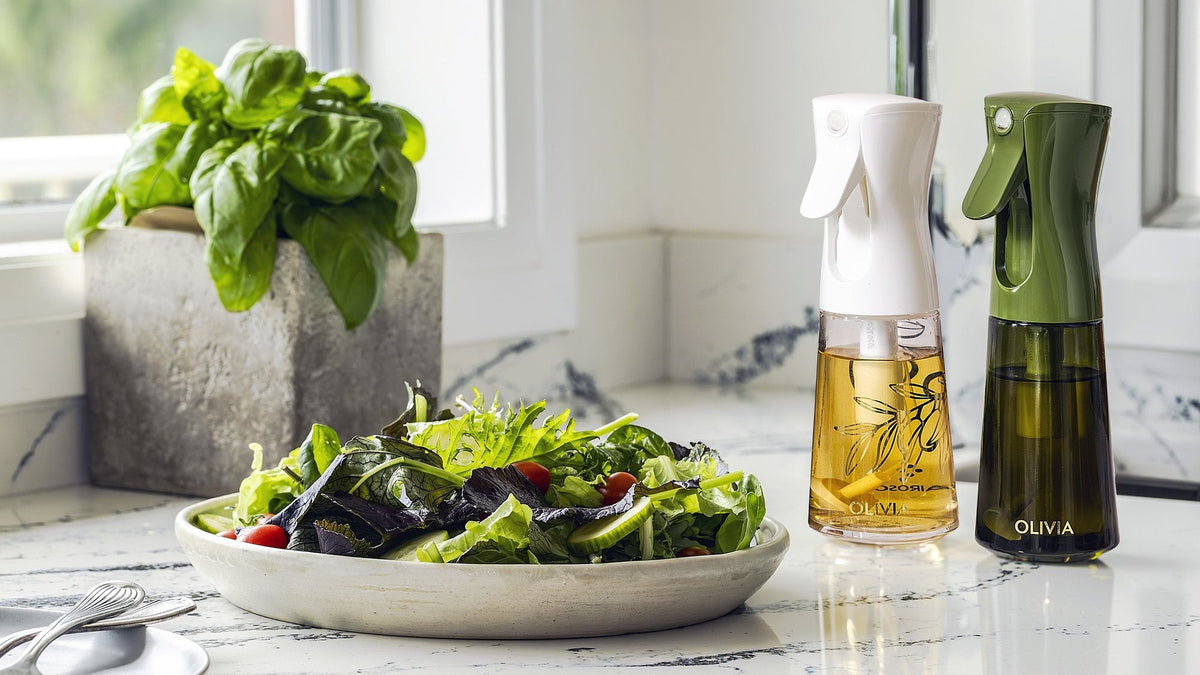
Refilling is easier when you can actually see the oil level. OLIVIA Signature is a refillable glass olive oil sprayer with a borosilicate glass bottle, so a quick look tells you when it's running low, whether the oil still looks clear, and when you've reached the right fill level.
You fill it with your own oil, it has no propellants or aerosol, and it sprays a fine, even mist once primed. It comes in 130 ml and 200 ml sizes. The smaller 130 ml Golden Leaves sprayer suits anyone who cooks a few times a week and prefers refilling more often with fresher oil.
Frequently Asked Questions
Can you refill olive oil spray?
You can't safely refill an aerosol can of olive oil spray, since those are sealed and pressurized. A refillable olive oil sprayer is made for exactly that: you unscrew the top, add your own oil and screw it back on.
How do you fill an oil spray bottle without spilling?
Work over a sink or tray, use a small funnel and pour slowly. Stop at about three-quarters full, then wipe the neck and threads before closing the cap.
Can you put vegetable oil in a spray bottle?
Yes. Vegetable, canola, light olive and avocado oil all work well in a refillable oil spray bottle. Wash and dry the bottle first if it held a different oil before.
Can you use a regular spray bottle for cooking oil?
A basic trigger bottle made for water or cleaning sprays usually struggles with oil, which is thicker, and it may not be made for food. A sprayer designed for cooking oil gives a finer, more even mist.
Why does my oil sprayer sputter after refilling?
Air in the tube, a loose cap or a few drops of water left from washing are the usual causes. Pump it a few times into the sink, check the cap is tight, and make sure the bottle is fully dry before the next refill.
Wipe the threads, leave some headroom, and your sprayer will keep misting the way it did on day one.