Most salads don't go wrong in the bowl. They go wrong in the last ten seconds, when a glug of dressing lands on the top layer, the leaves underneath stay bare, and whatever doesn't cling ends up in a puddle at the bottom.
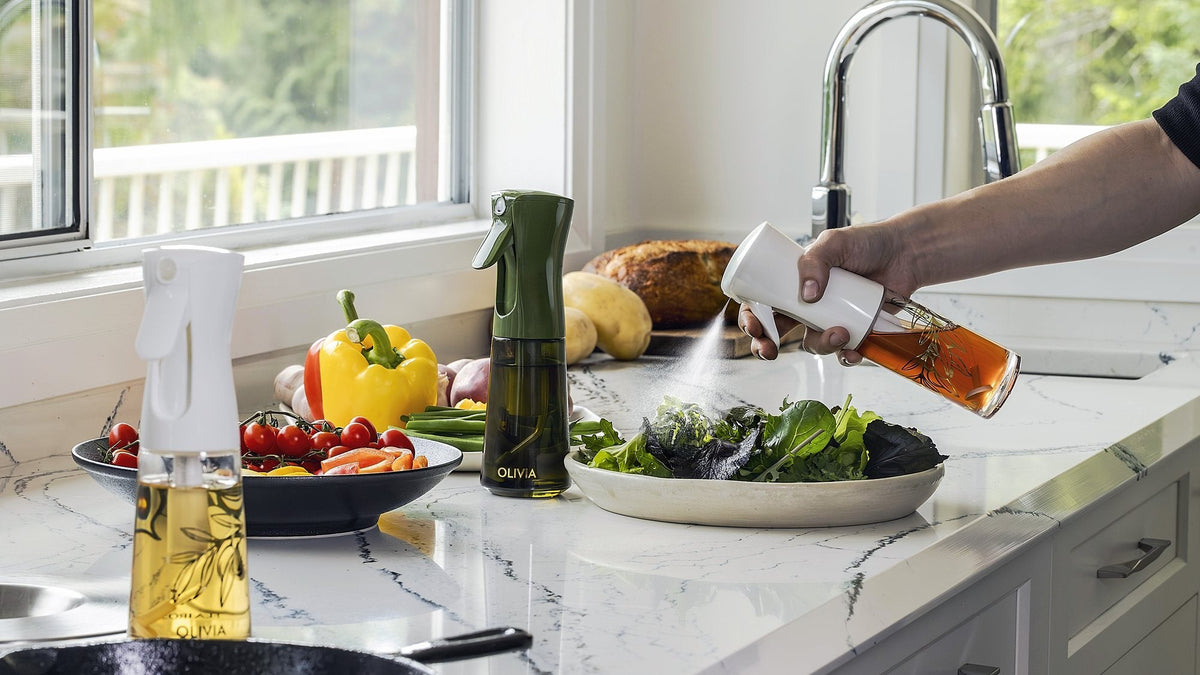
Using an olive oil sprayer for salad fixes that. Mist the dry leaves with oil, toss, mist again with vinegar or squeeze over some lemon, then season and taste. Every leaf gets a thin, even coat, and you decide exactly how much goes on.
It's not a replacement for every dressing. A creamy Caesar or a mustardy vinaigrette still belongs in a jar. But for green salads, tomato salads and anything with bread or grilled vegetables, spraying is often the better tool.
What's in this guide:
- Why spray dressing at all
- How to dress a salad with an olive oil sprayer
- Oil and vinegar: one bottle or two?
- Salads that suit a spray
- When a poured vinaigrette is better
- Seasoning that actually sticks
Why Spray Your Salad Dressing?
Delicate leaves can only hold so much oil. Pour on more than they can carry and the extra weighs them down, so the salad goes limp before it reaches the table. A mist spreads a small amount of oil across a large surface, which is exactly what thin leaves need.
There's a practical side too. When you pour, it's hard to know how much went on until you see the pool. With a sprayer you count pulls, so the same salad tastes the same every time. Based on lab testing, a sprayer can use up to 80% less olive oil than pouring, which also means a bottle of good oil lasts longer.
And you can still taste the oil. A fine coat of a peppery extra virgin olive oil on bitter leaves is a dressing in its own right, with nothing to hide behind.
How to Dress a Salad with an Olive Oil Sprayer
The method is the same whether you're making one side salad or a big bowl for the table. The order matters more than the amounts.
- Dry the leaves well. Spin or pat them dry. Oil slides off wet leaves, and you'll end up spraying twice as much.
- Use a bowl that's too big. You need room to toss without leaves flying out.
- Spray the oil first. Hold the bottle 6 to 10 inches above the bowl and move it in slow circles. For two generous handfuls of greens, start with 3 or 4 full pulls of the trigger.
- Toss, then spray again. Toss gently with your hands or salad servers, then give one or two more pulls to the leaves that came up from the bottom.
- Add the acid. Spray vinegar from a second bottle, or squeeze over lemon juice. Oil first means the acid sits on the oil rather than soaking straight into the leaves.
- Season and taste. Add flaky salt and black pepper, toss once more, and taste a leaf. Adjust with another pull of oil or a little more acid.
Dress the salad right before it goes to the table. Even a light coat starts to wilt tender greens after 15 to 20 minutes.

Oil and Vinegar: One Bottle or Two?
It's tempting to mix a vinaigrette and put it straight in the sprayer. In practice, oil and vinegar separate within minutes, so the first pulls come out mostly oil and the last ones mostly vinegar. Keeping them in separate bottles gives you far more control.
A simple setup is a larger olive oil spray bottle for everyday oil and a smaller one for vinegar. A few things help:
- Choose a thin vinegar. Red wine, white wine, sherry, apple cider and rice vinegar all spray well. Thin, everyday balsamic is usually fine too.
- Skip syrupy vinegars. Aged balsamic and balsamic glaze are too thick for a fine mist and can clog the nozzle. Drizzle those with a spoon.
- Label or color-code. Two bottles in different colors save a lot of guessing at the counter.
- Rinse when you switch. If you move a bottle from vinegar to oil, wash and dry it completely first. Our guide on how to clean an oil spray bottle covers the routine.
Not every oil is a good fit for a sprayer either. Thin, smooth oils work best, and this rundown of which oils you can use in an oil sprayer explains why.
Salads That Suit an Oil Spray Bottle
Spraying shines wherever you want a light, even coat rather than a sauce. A few favorites:
Simple green salads
Butter lettuce, arugula, mixed baby leaves. These are the salads that suffer most from overdressing. A few pulls of oil, a mist of white wine vinegar and some salt is all they need. If you want a starting point, this simple garden salad is easy to adapt.
Panzanella and bread salads
Bread soaks up dressing unevenly. Some cubes turn soggy while others stay dry. Spray the bread cubes on their own first, then the tomatoes and greens, and toss everything together just before serving.

Tomato and cucumber salads
Juicy vegetables release liquid as they sit, which waters down a poured dressing. A mist of oil and a pinch of salt right before serving keeps the flavors bright.
Crudité platters
Spray sliced radishes, fennel, carrots and snap peas lightly with oil, then sprinkle with flaky salt. They look glossy and the salt stays put, with no bowl of dip required.
Grain and roasted vegetable salads
Farro, quinoa and roasted squash can taste dry the next day. A quick spray of oil and vinegar refreshes leftovers without drowning them.
When a Poured Vinaigrette Is Still Better
A sprayer is great with thin liquids. Anything thick or emulsified won't pass through the nozzle, and that includes some of the best dressings.
| Dressing | Spray or pour? |
|---|---|
| Olive oil and lemon or vinegar | Spray, in two separate bottles |
| Classic vinaigrette with mustard | Whisk and pour |
| Creamy dressings (Caesar, ranch, yogurt) | Pour or toss |
| Dressings with garlic, herbs or shallots | Pour, since solids clog the nozzle |
| Honey or maple dressings | Pour |
For a whisked vinaigrette, a reliable starting ratio is 3 parts oil to 1 part vinegar, with a teaspoon of Dijon mustard and a pinch of salt. Shake it in a jar and adjust to taste. Brighter vinegars and lemon juice often taste better closer to 2 to 1.
You can still use the sprayer with these. Give the leaves a light mist of oil first, then add a smaller spoonful of the thicker dressing. The oil helps it spread, so you need less of it.
Seasoning That Actually Sticks
Salt and pepper bounce off dry leaves and collect at the bottom of the bowl. A thin coat of oil gives them something to hold on to, which is one of the quiet benefits of spraying.
- Season after the oil, not before. Salt on bare leaves draws out water and starts wilting them.
- Use flaky salt. Larger flakes cling to an oiled surface and give little bursts of flavor.
- Try dried herbs and spices. Za'atar, sumac, chili flakes or dried oregano stick well to a sprayed salad.
- Add zest last. Fresh lemon zest over the top brightens the whole bowl without adding more liquid.
One small safety note if you also use the same bottle at the stove: oil mist is flammable, so always spray food away from an open flame or a hot burner.

A Two-Bottle Setup for the Salad Bowl
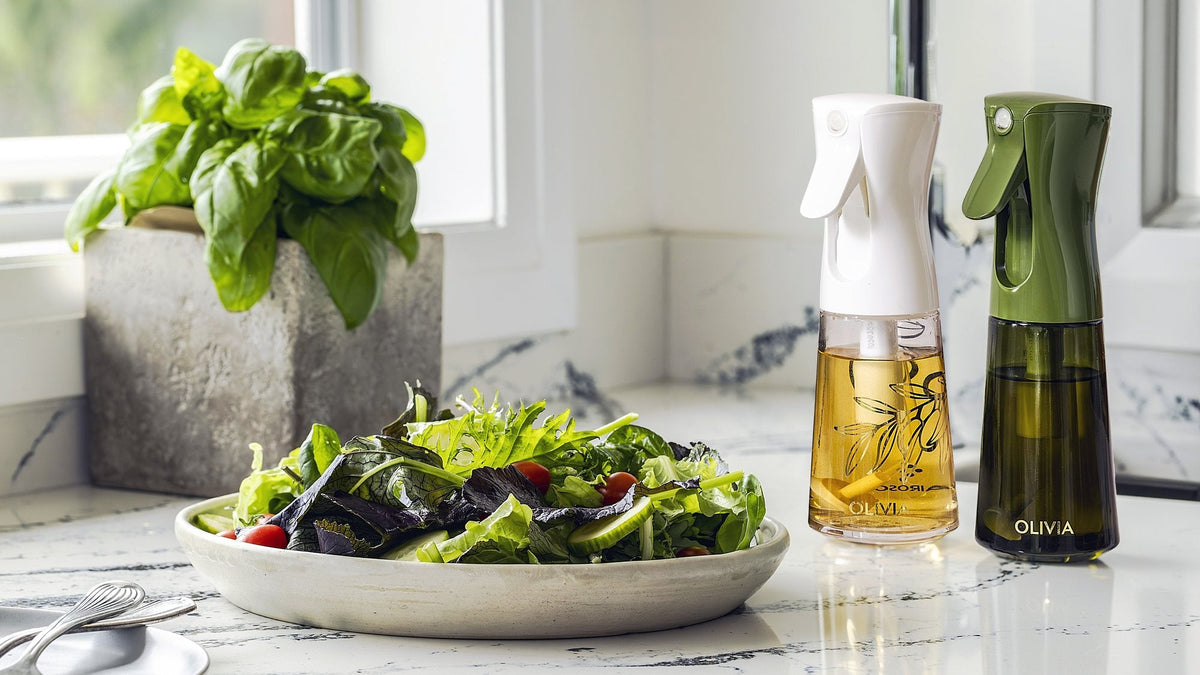
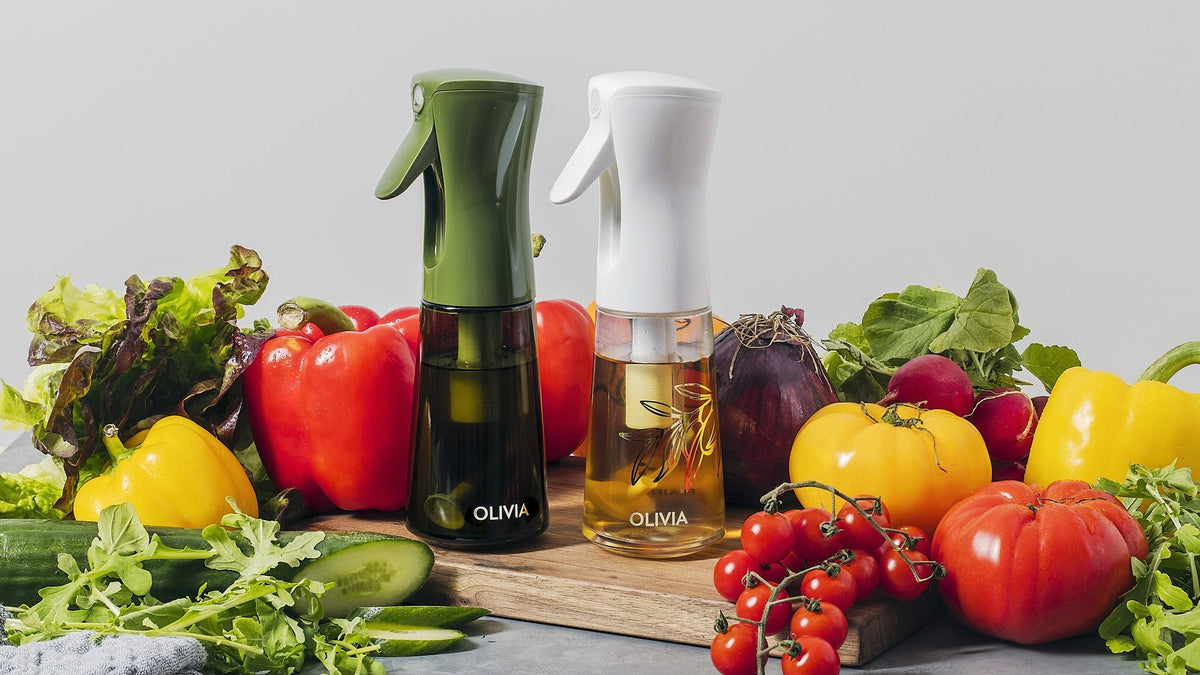
The OLIVIA Signature olive oil sprayer is a refillable borosilicate glass bottle with no propellants or aerosol, so what lands on your salad is only the oil or vinegar you poured in. Its pump builds pressure before it sprays, which gives a fine, even mist rather than drops.
Because it comes in Olive Green, Golden Leaves and Black, and in 130 ml and 200 ml sizes, it's easy to keep one bottle for oil and another for vinegar and tell them apart at a glance. The 200 ml Golden Leaves sprayer makes a good everyday oil bottle next to a darker one for vinegar.
Frequently Asked Questions
Can you use olive oil spray on salad?
Yes. Spraying olive oil onto dry salad leaves gives them a thin, even coat that pouring rarely manages. Toss after the first few sprays, then add a little more where the leaves look bare.
Can you use olive oil spray as salad dressing?
On its own, olive oil is only half a dressing. Spray the oil first, then add vinegar or lemon juice and a pinch of salt, toss and taste. That simple combination works well on most green salads.
Can you just put olive oil on salad?
You can, and a good extra virgin olive oil with flaky salt is a classic way to dress greens. A splash of acid such as lemon or vinegar usually makes the flavors brighter, so it's worth adding.
Can you put balsamic vinegar in a spray bottle?
Thin, everyday balsamic vinegar usually sprays well in a clean glass sprayer. Aged balsamic and balsamic glaze are too thick for a fine mist and can block the nozzle, so drizzle those with a spoon instead.
Can you put vinegar and oil in the same spray bottle?
It's better to keep them in separate bottles. Oil and vinegar separate quickly, so a mixed bottle sprays mostly oil at first and mostly vinegar at the end.
Dry leaves, a few pulls of oil, a mist of vinegar and a pinch of salt: that's a salad dressed evenly from the top of the bowl to the bottom.