Most kitchens have one bottle of olive oil that does everything. It gets glugged into pans, poured over salads and tipped onto sheet pans, and some of those jobs go better than others. The question isn't really which container is nicer. It's which one suits the task in front of you.
Here's the plain answer: an olive oil dispenser bottle with a pour spout is better when you need a measured amount or a visible drizzle, and an oil sprayer is better when you want a thin, even coat over a wide surface. If you cook most nights, there's a good case for keeping one of each next to the stove.
Jump to:
- How each one gets oil onto food
- Task by task: pour or spray?
- When an olive oil dispenser bottle is the better tool
- When a sprayer does the job better
- Keeping both without cluttering the counter
- What to check before you buy
How Each One Gets Oil Onto Food
A dispenser bottle is simple. You tip it, and gravity sends a stream of oil through the spout. A good spout gives you a steady, controllable line that stops cleanly when you tilt the bottle back up. A poor one glugs, dribbles down the side, or leaves an oily ring on the counter.
A sprayer breaks the oil into fine droplets and spreads them over an area. Instead of a line of oil landing in one spot, you get a light film across the whole surface. The quality of that film depends almost entirely on the pump. Some sprayers produce a true mist, while others sputter or shoot a narrow jet that behaves more like a pour.
That difference is the whole story. Pouring concentrates oil, and spraying distributes it. Neither is better in general. Each is better at certain things.
Task by Task: Pour or Spray?
Here's how the two compare across the jobs most home cooks do in a normal week.
| Task | Better choice | Why |
|---|---|---|
| Measuring for a recipe | Dispenser bottle | Pour straight into a tablespoon or measuring cup. |
| Vinaigrettes and marinades | Dispenser bottle | You need a set amount to whisk with acid and seasoning. |
| Finishing drizzle on soup, hummus or pasta | Dispenser bottle | A visible ribbon of good oil is part of the dish. |
| Coating vegetables for roasting | Sprayer | A thin, even layer browns better than oil pooled in a few spots. |
| Air fryer food | Sprayer | A light coat on the food helps it crisp without dripping into the basket. |
| Greasing baking pans and muffin tins | Sprayer | Reaches corners and edges with no brush and no streaks. |
| Dressing salad leaves lightly | Either | Spray for an even coat, pour if you're making a classic dressing. |
| Shallow frying | Dispenser bottle | You need a real layer of oil in the pan, not a film. |
| Eggs and pancakes in a nonstick pan | Sprayer | A light, even coat is usually all the pan needs. |
| Toast, bread and croutons | Sprayer | Every slice gets some oil instead of a few soaking it all up. |
A pattern shows up quickly. When the amount matters or the oil is meant to be seen, pour. When the goal is coverage, spray.

When an Olive Oil Dispenser Bottle Is the Better Tool
Some jobs need a real quantity of oil, and a sprayer would take forever to deliver it. If a recipe calls for three tablespoons in a dressing or a quarter cup for a marinade, pour it. Spraying that much is slow, and you lose track of how much went in.
Finishing is the other big one. A thread of peppery extra virgin olive oil over white bean soup, burrata or a bowl of pasta is something you want to see and taste. That's a pouring job, and a dispenser bottle with a narrow spout gives you far more control than tipping the original bottle.

What makes a good pour spout
- A clean cut-off. The flow should stop when you tilt back, without a drip running down the neck.
- A steady stream. Narrow spouts give a thin line for drizzling. Wider ones pour faster for measuring.
- A cap or flip lid. It keeps dust out and limits air contact between uses.
- An opening you can clean. Old oil in the spout can turn stale, so you want to be able to rinse it.
When a Sprayer Does the Job Better
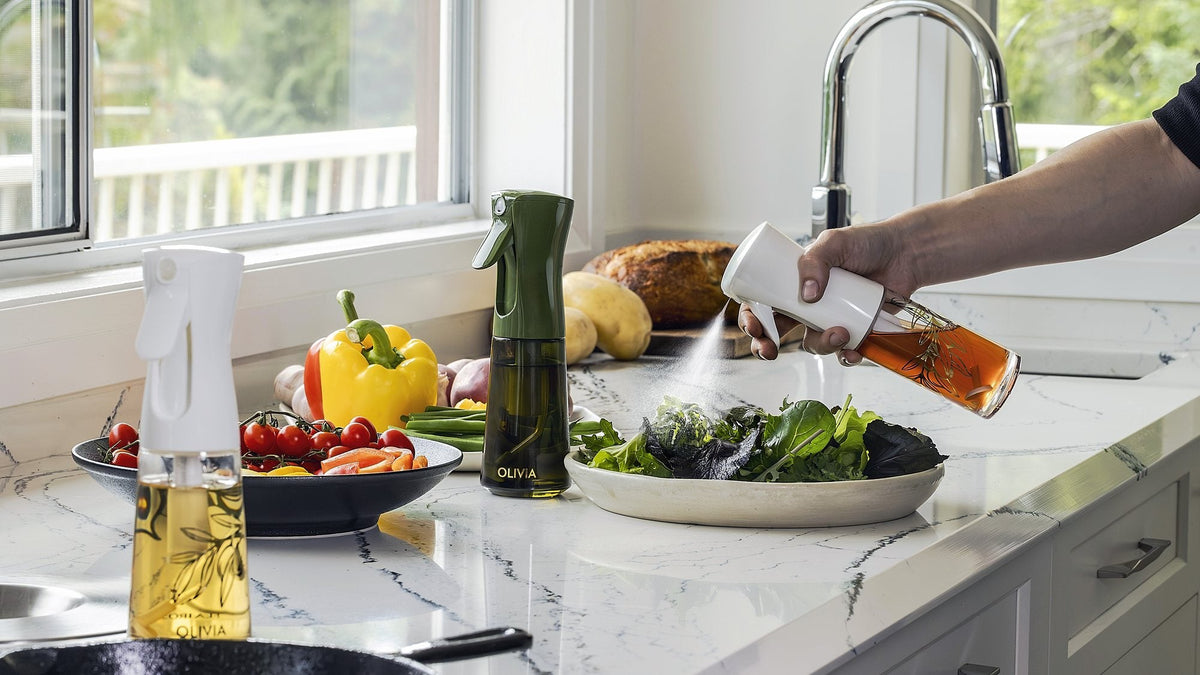
Coverage is where a sprayer earns its place. Pour oil over a tray of cut vegetables and it lands in a few streaks. Some pieces get soaked, others stay dry, and you end up tossing everything with your hands to even it out. A few passes of fine mist coat the whole tray in seconds.
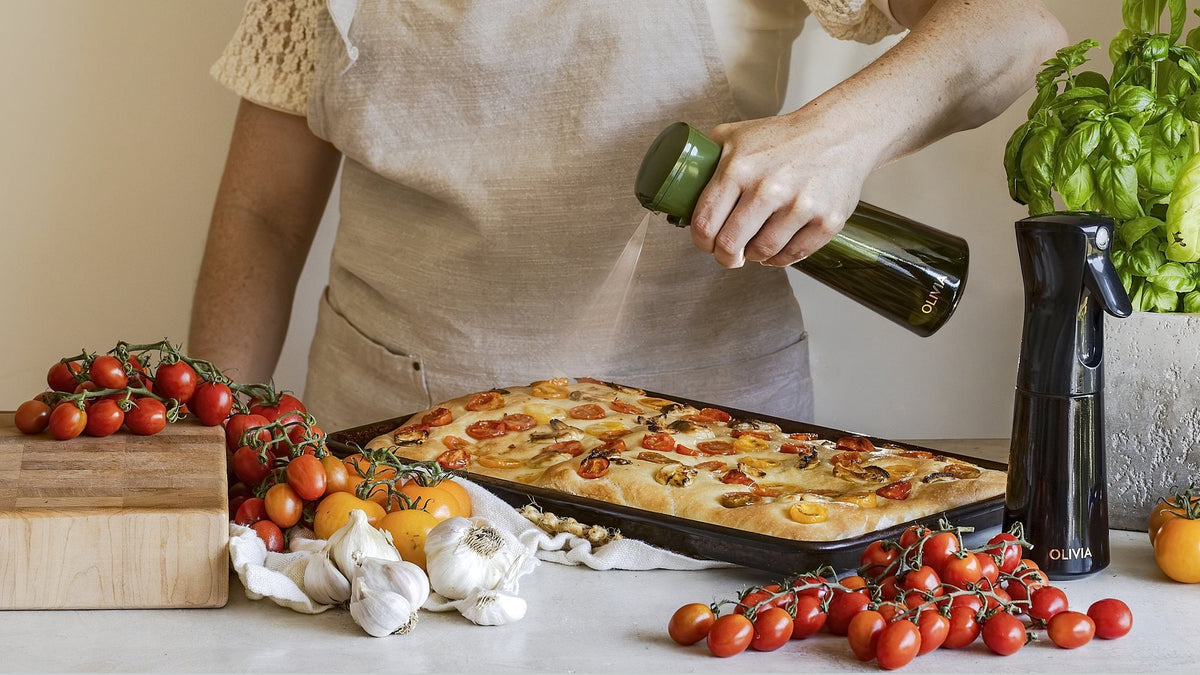
The same goes for roasting potatoes, greasing a bundt pan, coating chicken before it goes into the air fryer, or misting bread before toasting. Our guide to using an olive oil sprayer in your air fryer walks through how much to use and when to spray.
A sprayer is also handy at the table. A couple of passes over a bowl of greens gives a lighter, more even result than a poured dressing, which is why we wrote a whole post on salad dressing with an olive oil sprayer.

One safety note whenever heat is involved: spray the food or the pan before it goes near the heat, and never spray toward an open flame or a hot burner. Oil mist is flammable.
Keeping Both Without Cluttering the Counter
If you decide you want both, it doesn't need to take over your kitchen. A simple setup that works for a lot of home cooks:
- Fill the dispenser bottle with your best extra virgin olive oil for dressings, drizzling and finishing.
- Fill the sprayer with an everyday olive oil for roasting, baking and air frying, where nuance in flavor matters less.
- Keep both a little away from the stove. Heat and light are hard on olive oil, so a spot beside the cutting board works better than right next to the burner.
- Refill little and often. Smaller amounts get used up while the oil still tastes fresh. Our guide on how to refill an olive oil sprayer keeps the process tidy.
Some cooks prefer a single tool and get on fine with it. If most of your cooking is roasting, air frying and sautéing, a sprayer may cover almost everything. If you mostly make dressings and finish dishes with oil, a dispenser bottle may be all you need.
What to Check Before You Buy
Whichever way you lean, a few details decide whether you'll actually enjoy using it every day.
Material
Glass doesn't hold onto smells, cleans easily and lets you see the oil level. Ceramic and stainless steel keep light out completely but hide how much is left. Darker or tinted glass is a middle ground. If you'd like more detail on the material question, see our guide to choosing the right oil dispenser for your kitchen.
Size
A bottle you'll finish within a few weeks keeps oil fresher than a large one that sits half full for months. Think about how often you cook and pick the size that matches.
For sprayers, the spray itself
This matters more than anything else. Look for a pump that gives a consistent mist from the start of the press to the end, rather than a single squirt followed by a dribble. A sprayer that streams is really just a slow pour spout.
A Mist You Can Rely On
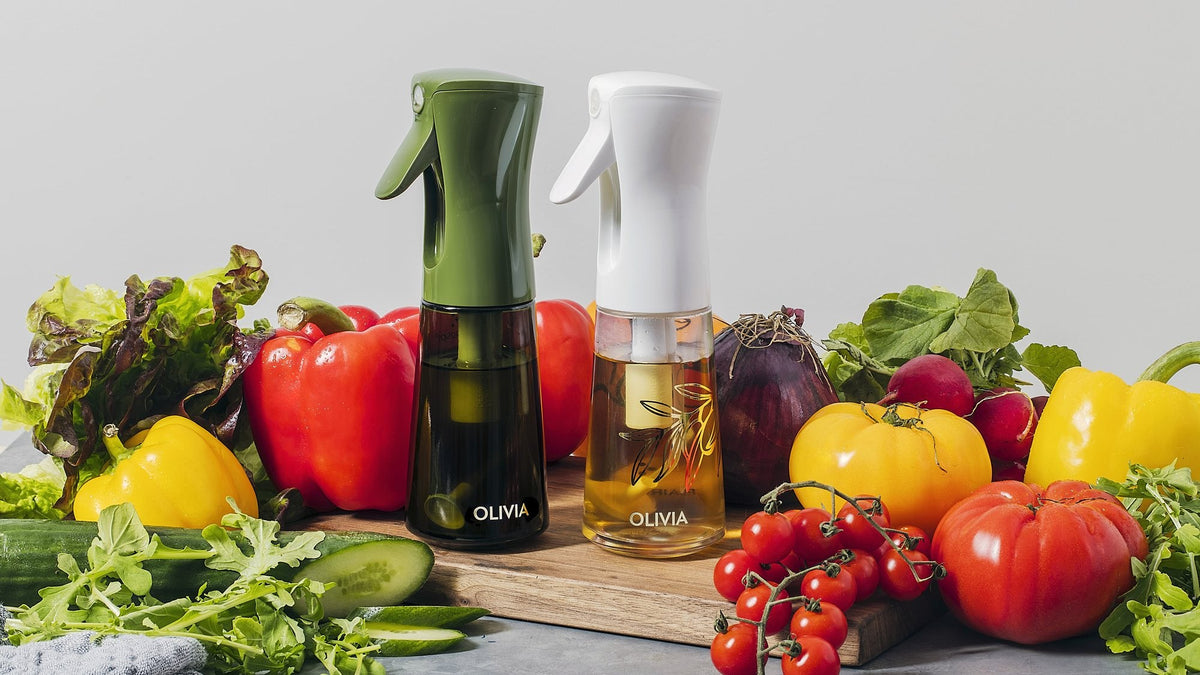
If the sprayer side of the table fits how you cook, OLIVIA Signature is a refillable oil sprayer with a borosilicate glass bottle. You fill it with your own oil, there are no propellants or aerosol involved, and the pump builds pressure so it sprays a fine, even mist. It comes in 130 ml and 200 ml sizes, in Olive Green, Golden Leaves and Black.
Many cooks pair one with their favorite pour-spout bottle and use each for what it does best. The 200 ml OLIVIA oil sprayer in Black sits neatly beside most dispenser bottles on the counter.
Frequently Asked Questions
How do you use an olive oil dispenser?
Fill it about three quarters full through a small funnel, cap it, and tilt it gently over the food or measuring spoon. Tilt back slowly to stop the flow cleanly, and wipe the spout now and then so oil doesn't build up.
Should an oil dispenser spray or pour?
It depends on the job. Pouring is better for measured amounts, dressings and finishing drizzles, while spraying is better for an even coat on vegetables, pans and air fryer food. Many kitchens keep one of each.
Is a glass or ceramic olive oil dispenser bottle better?
Glass lets you see how much oil is left and is easy to clean, while ceramic blocks light completely. Either works well if you keep the bottle away from the stove and refill it with small amounts you'll use within a few weeks.
How do you clean an olive oil bottle spout?
Pull the spout out if it's removable and soak it in warm, soapy water, then flush water through it and let it dry fully. If it's fixed, fill the bottle with warm soapy water, shake, pour it out through the spout and rinse well before refilling.
Can you put olive oil in a squeeze bottle?
Yes, a food-safe squeeze bottle works for olive oil and gives you good control for drizzling. Keep it out of direct light and heat, and clean it between refills so old oil doesn't mix with fresh.
Pour when the amount matters, spray when coverage matters, and your olive oil will end up exactly where you want it.