Greasing a pan is one of those small jobs that decides how a bake ends. Miss a corner and half a muffin stays in the tin. Overdo it and the edges of a cake fry instead of bake. Most of us reach for a stick of butter, a paper towel and some guesswork.
An oil spray bottle makes this easier. A fine mist reaches into corners, fluted edges and muffin cups in a couple of seconds, leaving a thin, even layer instead of streaks and pools. Filled with olive oil or a neutral oil, it handles most everyday greasing jobs and gives bread tops a light, glossy finish.
Below is how to use one across the baking you actually do, from layer cakes to a tray of focaccia, plus where pouring or butter still makes more sense.
What's covered:
- Why a mist works better than a paper towel
- Cake pans, loaf tins and bundt pans
- Muffin tins and small molds
- Focaccia and bread tops
- Filo, pastry and crisp toppings
- Which oil to use for baking
Why an Oil Spray Bottle Beats a Paper Towel
The trouble with greasing by hand is coverage. Butter on a paper towel goes on thick where you start and thin where you finish, and it rarely gets right into the seam where the side of a pan meets the base. That seam is exactly where cakes tend to stick.
A spray covers the whole surface at once. Hold the bottle about 6 to 8 inches from the pan, turn the pan as you go, and you get the same thin coat on the base, the walls and the corners. Two or three sprays are usually enough for an 8-inch round.
It also keeps your hands clean, which matters more than it sounds when you're halfway through a recipe with flour on everything. And because you fill the bottle yourself, you know exactly what's in it: just oil, with no propellant. If you've wondered how that compares with a can, here's a closer look at an olive oil spray bottle vs. aerosol cooking spray.
Cake Pans, Loaf Tins and Bundt Pans
For a plain round or square cake pan, spray the base and sides, then line the base with a circle of parchment. A light mist under the parchment holds it flat, and a second quick spray on top of the paper helps the cake release cleanly.

Grease and flour, the easy way
Many recipes ask you to grease and flour the pan. A spray makes the first half quick: mist the pan, add a spoonful of flour, then tap and turn it until every surface is dusted. Knock out the excess over the sink. For chocolate cakes, use cocoa powder instead of flour so you don't get a pale film on the outside.
Bundt and fluted pans
Bundt pans are where a spray really earns its place. The ridges and the central tube are hard to reach with butter, and any bare spot can pull a chunk off the cake. Spray from a few angles, look inside for any dry patches, and give those an extra pass. Then flour as above.
Loaf tins
Banana bread and pound cake are dense and tend to grip the corners of a loaf tin. Spray all four corners first, then the long sides. A parchment sling across the long sides, lightly sprayed, lets you lift the loaf straight out.
Muffin Tins and Small Molds
Twelve muffin cups by hand is tedious. With a sprayer it takes seconds. Tilt the tin slightly toward you and give each cup one short spray, aiming at the base so the mist rolls up the sides.

Don't forget the flat top of the tin between the cups. Muffins that rise over the edge will stick there if it's bare. The same goes for mini loaf pans, madeleine molds and cupcake tins you use without paper liners.
If you do use paper liners, a very light spray inside each liner helps with lower-fat batters, which can cling to the paper.
Focaccia and Bread Tops
Focaccia is a special case. It's meant to be oily, and the crisp, almost fried base comes from a generous pour of olive oil in the pan. Keep pouring for that part. A spray is no substitute for the layer that fries the bottom.
Where the oil spray bottle helps is everywhere else:
- The proofing bowl. A quick mist stops the dough from sticking while it rises, and the dough slides out without tearing.
- Your fingers. Spray your fingertips before dimpling so they don't drag the dough.
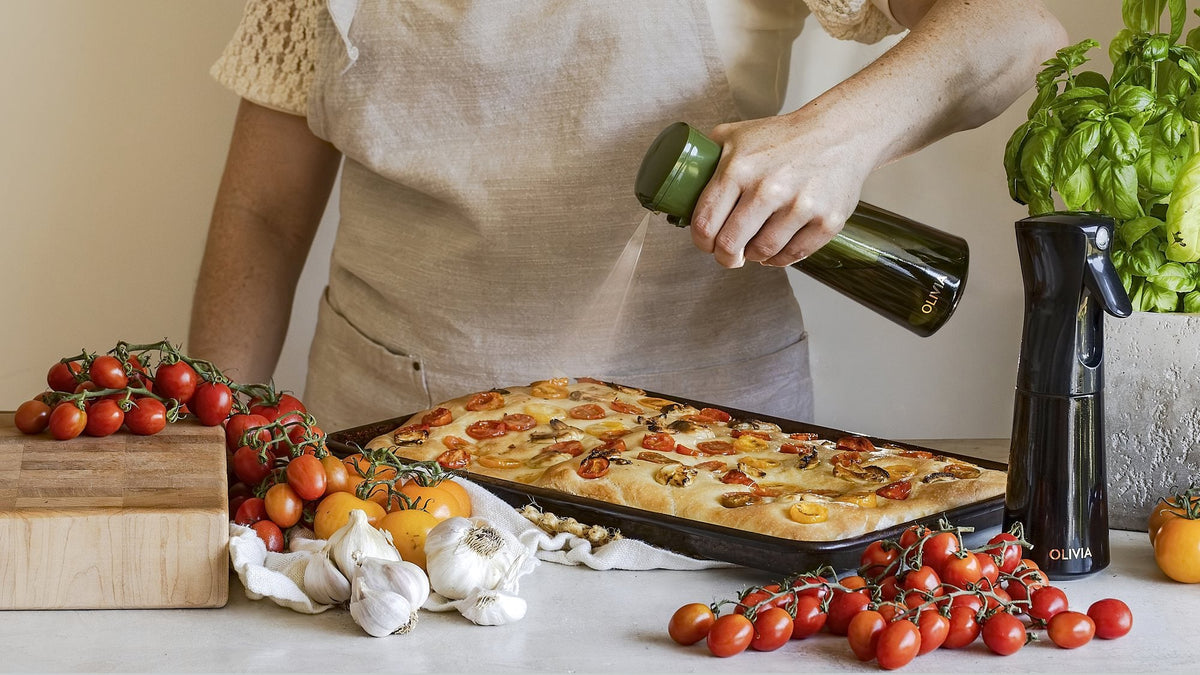
- The top before baking. After dimpling and adding toppings, a light, even mist over the surface helps it brown evenly without filling every dimple with a pool of oil.
- Straight out of the oven. A final light coat gives the crust a soft shine. Do this once the pan is safely out on a heatproof surface, away from the oven.
The same top-coat trick works on dinner rolls, flatbreads and pizza crusts. A thin layer of oil on the crust before baking gives you a deeper golden color.
Filo, Pastry and Crisp Toppings
Filo is traditionally brushed with melted butter, sheet by sheet. A brush tears the thin sheets more easily than you'd like, and it's hard to get an even layer. A light spray between sheets is gentler and quicker. Mist each sheet, lay the next one on top, and repeat.

For filled pastries, a final mist over the tops before they go in the oven helps them turn golden and crisp. If you want to try it, the spanakopita recipe on this blog is a good place to start.
A few other places to use a spray in baking:
- Crumble and streusel toppings that look dry halfway through baking
- Homemade granola, spread on a tray and misted before toasting
- Bread crumbs or panko on top of a gratin
- Measuring cups and spoons before honey or syrup, so it slides right out
One safety point that applies to all of these: open the oven and pull the rack out before you spray, or take the tray out entirely. Never spray toward a hot heating element, a gas flame or an open burner.
Which Oil to Use for Baking
Olive oil works well for savory bakes and many cakes, but its flavor does come through. A mild or light olive oil is barely noticeable, while a peppery extra virgin oil shows up in a delicate sponge. Some bakers keep two bottles: one with olive oil for bread and savory dishes, one with a neutral oil for sweet bakes.
| What you're baking | A good oil to spray |
|---|---|
| Focaccia, flatbread, pizza crust | Extra virgin olive oil |
| Filo pastries, savory tarts | Olive oil |
| Vanilla cakes, sponges, muffins | A neutral oil, such as sunflower or canola |
| Chocolate, citrus and olive oil cakes | Mild olive oil or a neutral oil |
| Granola and crumbles | Whichever flavor you prefer |
Whichever oil you choose, keep it smooth and free of herbs or garlic so the nozzle stays clear. This guide on which oils you can use in an oil sprayer covers the details, and if a bottle ever starts to sputter, here's how to clean an oil spray bottle.
A Bottle That Lives Next to the Mixing Bowls
Most of the tips above come down to one thing: a sprayer that gives you a fine, even mist rather than a jet. That's what gets oil into the corners of a bundt pan without leaving puddles at the bottom.
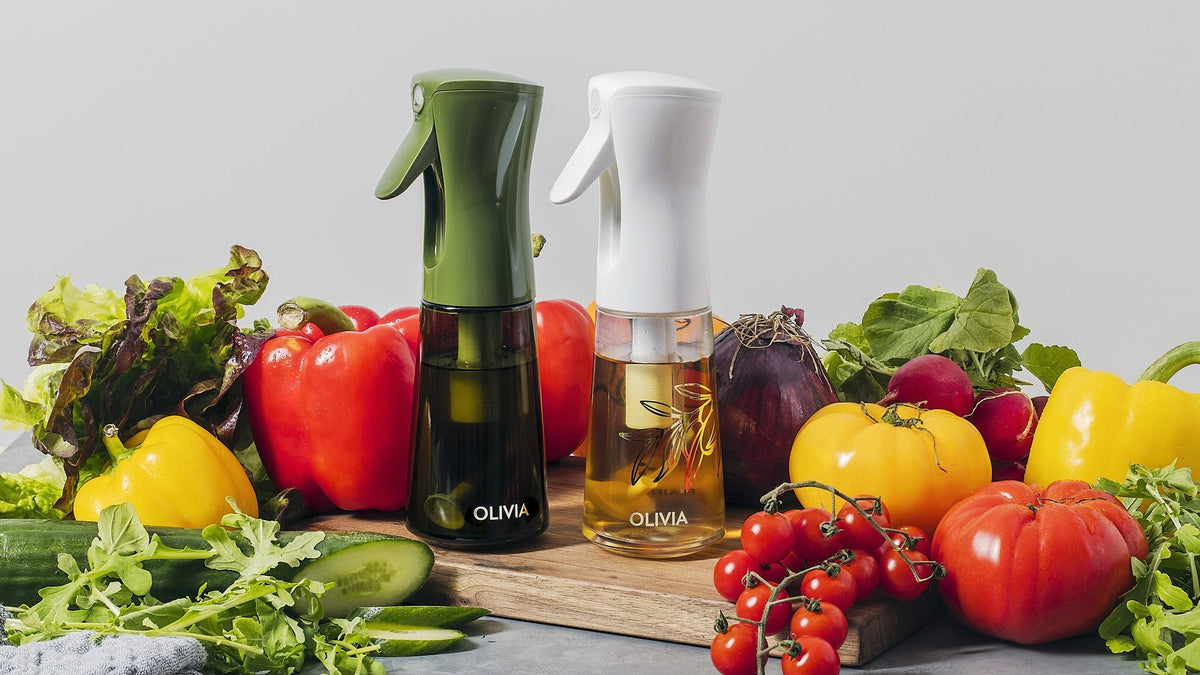
OLIVIA Signature is a refillable glass oil sprayer with a borosilicate glass bottle. You fill it with your own oil, it sprays a fine, even mist, and there's no propellant or aerosol involved. It also works as an everyday oil sprayer for cooking, so the same bottle moves from the stove to the baking counter. If you like the idea of a separate bottle for baking, the 200 ml OLIVIA Signature sprayer in Black makes it easy to tell apart from the one you use for savory cooking.
Frequently Asked Questions
Can you use olive oil spray for baking?
Yes. Olive oil spray is good for greasing pans, misting bread tops and layering filo. For delicate cakes, choose a mild olive oil or a neutral oil so the flavor doesn't come through.
Can you grease a cake pan with olive oil spray?
You can. Mist the base and sides evenly, line the base with parchment, and give the paper a light spray too. For bundt pans, spray from several angles and dust with flour afterwards.
Can I use oil to grease a baking pan instead of butter?
Yes, oil works well for most cakes, muffins and breads. A thin, even layer from a sprayer covers corners better than butter on a paper towel, though some recipes still call for butter for its flavor.
How do you grease a pan without cooking spray?
Fill a refillable sprayer with your own oil and mist the pan, or brush on a thin layer of oil or softened butter. Lining the base with parchment adds extra insurance for cakes.
Can you use extra virgin olive oil for focaccia?
Yes, and it's the classic choice. Pour a generous layer into the pan for the crisp base, then use a light mist on top before and after baking for an even, golden crust.
Keep a sprayer within reach of your mixing bowls, and greasing a pan becomes the quickest step in the recipe.