Most of the oil we cook with isn't really needed. It pools in one corner of the pan, soaks into the first few pieces of food that touch it, and the rest gets poured away with the washing-up water. Using less oil is rarely about giving up flavor. It's about putting the oil where it actually does something.
The simplest way to use less oil when cooking is to spread a thin, even layer instead of a puddle. An oil sprayer for cooking does exactly that: a few sprays coat a pan, a tray of vegetables or a salad evenly, so every surface gets a little oil and nothing sits in a pool. Add the oil to the food rather than the pan where you can, and save the measured pour for recipes that genuinely need it.
Below are the habits that make the biggest difference, dish by dish, plus the places where a generous pour is still the right call.
Jump to:
- Why we use more oil than we need
- A thin film instead of a pool
- Pan cooking and frying with less oil
- Roasting and sheet pans: spray, then toss
- Salads, bread and finishing touches
- When to measure, and when to pour
Why We Use More Oil Than We Need
A bottle with an open neck makes portion control hard. Oil is thin, it comes out faster than you expect, and a "glug" can easily be two or three tablespoons. Once it's in the pan, there's no getting it back.
The other problem is coverage. A spoonful of oil doesn't spread itself. It runs to the lowest point of the pan, so the middle is swimming while the edges stay dry. To fix the dry spots, most of us add more, and the total keeps creeping up.
So there are two goals: control how much leaves the bottle, and spread whatever does leave it evenly. Get both right and you can cut back without the food tasting any leaner.
A Thin Film Instead of a Pool: Using an Oil Sprayer for Cooking
This is where spraying beats pouring. A good sprayer breaks the oil into fine droplets and lays them down in a wide, even pattern. You get a thin film across the whole surface, which is what food actually needs to brown and not stick.
A few habits help the mist do its job:
- Hold the bottle about 6 to 8 inches away. Too close and you get a wet spot. A little distance lets the spray widen out.
- Sweep, don't point. Move across the pan or tray as you spray, the way you'd use a can of paint.
- Count your sprays. Two or three short sprays coat a 10-inch skillet. Counting turns a vague habit into something you can repeat.
- Keep the mist fine. If your sprayer has started to squirt, the oil lands in drops and you lose the benefit. Here's why an oil sprayer turns into a stream and how to fix it.
How much can you save? It depends on what you cook and how heavy-handed you were before. As a reference point, OLIVIA's own lab testing found up to 80% less olive oil than pouring when spraying. Treat that as a ceiling rather than a promise. The real gain for most cooks is simply knowing how much went in.
Pan Cooking and Frying With Less Oil
For eggs, pancakes, a piece of fish or a quick sauté, you don't need a layer of oil, just enough to stop the food from sticking and to help it color. Heat the pan first, take it off the burner, give it a light spray, and put it back on the heat.

Spraying the pan off the heat matters for safety as well as results. Never spray toward an open flame or a hot burner, and keep the bottle well away from the stove while you cook.
Stainless steel
Stainless steel pans are where people tend to overdo the oil, because food sticks to them so easily when they're cold. The fix is heat, not more fat. Preheat the dry pan over medium heat for a couple of minutes, then add a light coat of oil and wait a few seconds until it shimmers. Food added to a properly hot pan releases on its own once it's browned.
Cast iron and nonstick
A well-seasoned cast-iron skillet needs very little oil. A thin mist is plenty for eggs or a smash burger. Nonstick needs even less, and because you're using plain oil from your own bottle, you avoid the sticky residue that aerosol cans can leave behind. We looked at that in more detail in olive oil spray bottle vs. aerosol cooking spray.
Shallow frying
Breaded cutlets and fritters are the one case where a thin film isn't enough on its own. A middle path works well: use a modest amount of oil in the pan, then mist the top of each piece before you flip it. The second side browns in fresh oil without you topping up the pan.
Roasting and Sheet Pans: Spray, Then Toss
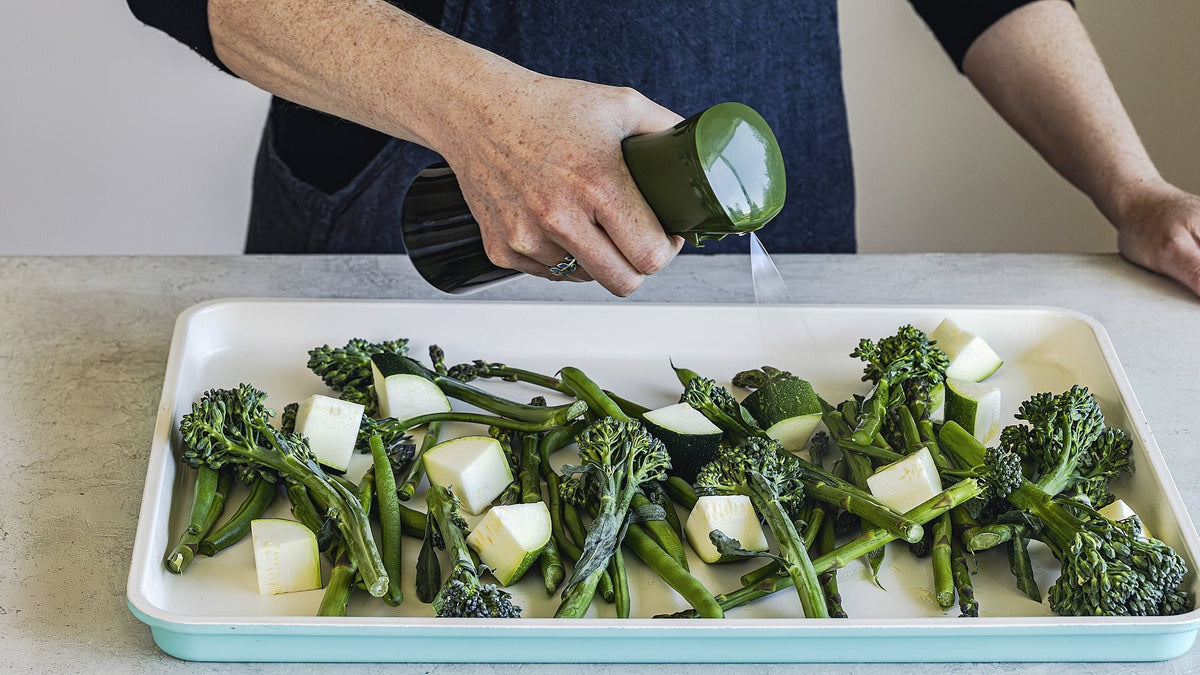
Roasting is where most kitchens use the most oil, because recipes often say "toss in 3 tablespoons of olive oil" no matter how big the tray. With an oil sprayer for cooking, the method changes slightly:
- Spread the cut vegetables on the tray in a single layer.
- Give them an even mist from above.
- Toss with your hands or a spatula, then mist once more.
- Season straight away, so the salt and spices stick to the oiled surfaces.

The toss is the step people skip. Spraying alone only reaches the top of each piece, and the toss is what gets oil onto the sides that will touch the hot tray. Two light passes with a toss in between give you better browning than one heavy pour.
Potatoes are the classic test. If you want to see the method in a full recipe, try these crispy roasted potatoes with an olive oil sprayer. The same idea carries over to the air fryer, where a light coat on the food is all it needs.
Salads, Bread and Finishing Touches
Dressing is a quiet oil trap. A tablespoon or two of olive oil poured over a bowl of greens tends to sink to the bottom, so the top leaves are bare and the bottom ones are soggy. A few sprays over the leaves, a toss, and a pinch of salt coat everything evenly with far less.

You can do the same with vinegar in a second bottle, which gives you a light vinaigrette straight onto the leaves. There's a fuller guide to salad dressing with an olive oil sprayer if you want ratios and ideas.
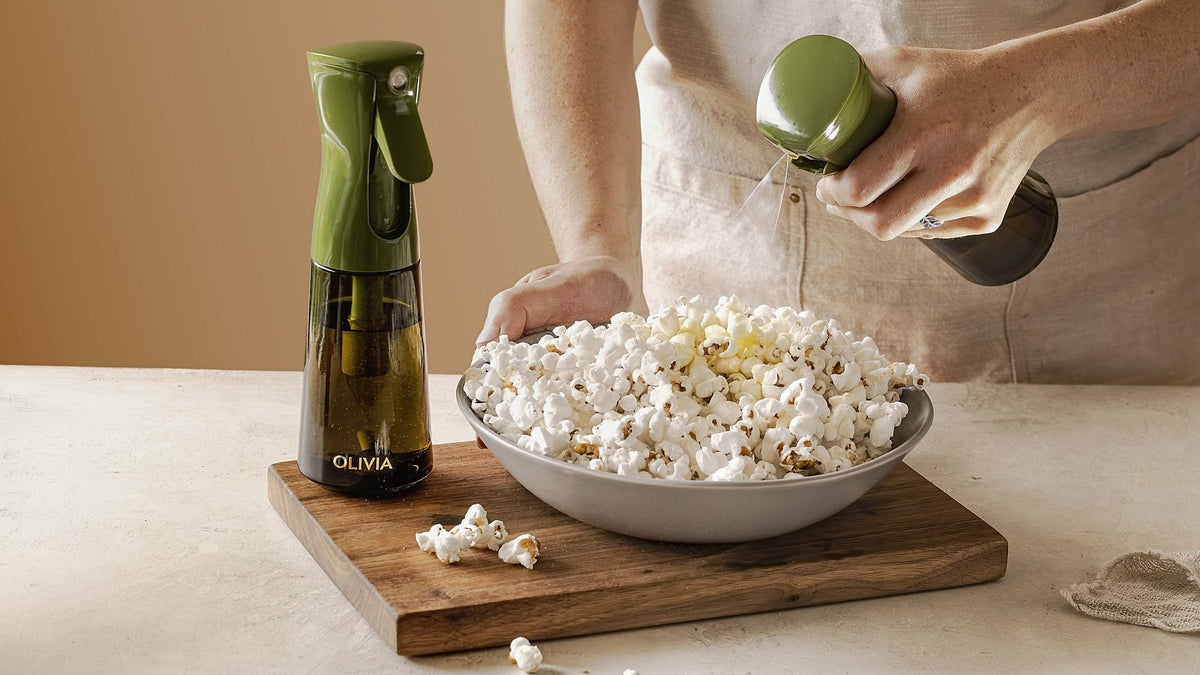
The same goes for bread before it goes under the grill, and for popcorn, where a light mist helps the seasoning stick without making it greasy.
When to Measure, and When to Pour
Spraying isn't the answer to everything, and pretending otherwise would just lead to disappointing food. Some dishes rely on oil as an ingredient, not just a coating.
| Cooking job | Best approach |
|---|---|
| Greasing pans, eggs, pancakes | Spray |
| Roast vegetables and potatoes | Spray, toss, spray again |
| Salads and bread | Spray |
| Sautéed onions and garlic for a sauce | Measured spoonful |
| Baking recipes that list oil in the batter | Measure exactly |
| Focaccia base, confit, deep frying | Pour, as the recipe says |
The sauce row is worth a word. When oil is the base of a sauce, it carries flavor from the onions, garlic and spices into everything else. Measure it with a spoon rather than pouring straight from the bottle, and you'll still use less than you would by eye. Once the food is in the pan, a quick spray is a better way to top up than another pour.
For flavor, a little good extra virgin olive oil added at the end often does more than a lot cooked from the start. For a second, milder oil for high heat, see which oils you can use in an oil sprayer.
If you're still weighing up spraying against pouring in general, here's an honest look at whether an oil spray bottle is worth it.
A Sprayer That Keeps the Mist Fine
All of this depends on an oil sprayer for cooking that actually mists. OLIVIA Signature is a refillable glass oil sprayer with a borosilicate glass bottle. You fill it with your own oil, there are no propellants or aerosol, and it sprays a fine, even mist across the pan or tray.
It comes in 130 ml and 200 ml sizes, in Olive Green, Golden Leaves and Black. If you cook most nights, the 200 ml Black olive oil sprayer is a practical everyday size to keep near, but not next to, the stove.
Frequently Asked Questions
How can I use less oil when frying?
Preheat the pan well, add a light spray or a measured spoonful instead of pouring, and mist the top of the food before you flip it rather than topping up the pan. A hot pan and even coverage matter more than the amount of oil.
How do you use less oil on a stainless steel pan?
Heat the dry pan over medium heat for a couple of minutes first, then add a thin coat of oil and wait until it shimmers. Food added to a properly hot stainless pan releases once it has browned, so you don't need extra oil to stop it sticking.
Does oil reduce when cooking?
Not in the way water does. Cooking oil doesn't boil away at normal stovetop temperatures. Some soaks into the food and the rest stays in the pan, which is why starting with less is the only reliable way to end up with less.
Is olive oil spray good for cooking?
Yes. Plain olive oil in a refillable oil sprayer for cooking works well for greasing pans, roasting vegetables, air frying and dressing salads. Spray off the heat, keep the coat light, and never spray toward an open flame or a hot burner.
What is the best pan to use without much oil?
A good nonstick pan needs the least oil, and a well-seasoned cast-iron skillet comes close. Stainless steel can work with very little oil too, as long as you preheat it properly before the oil goes in.
Start with the pan you use most, count your sprays for a week, and you'll quickly find how little oil your cooking really needs.