You wash the skillet, dry it, put it away, and the next time you pull it out there is a tacky, amber-colored coating that no sponge seems to shift. If you use canned cooking spray, that film is almost certainly the reason. It is a common complaint, and it is fixable.
Spray oil leaves a sticky brown film because thin layers of oil, plus the additives in many aerosol sprays, bake onto hot metal and harden into a gummy varnish. Switching to plain oil in a refillable oil spray bottle, using a lighter coat and washing pans properly while they are still warm stops most of it from forming in the first place.
What's covered:
- What that sticky brown film actually is
- Why canned cooking spray makes it worse
- Sticky residue on pans after washing
- How to remove sticky residue from pans
- Keeping it away with an oil spray bottle
What That Sticky Brown Film Actually Is
When a very thin layer of fat is heated, it reacts with oxygen and the molecules start linking together. Cooks call this polymerization. On a cast-iron pan, a controlled version of the same process is exactly what builds seasoning, so the chemistry itself is not the villain.
The trouble starts when the layer is uneven, gets heated only partway, or never gets washed off. Instead of a hard, smooth coat you get a soft, tacky one that grabs dust and food and slowly darkens from pale gold to brown. The edges and sides of a pan tend to get the worst of it, because spray drifts there and those areas run cooler than the center.
Why Canned Cooking Spray Makes It Worse
Most aerosol cooking sprays are not just oil. Many include an emulsifier such as lecithin, along with an anti-foaming agent and a propellant to push everything out of the can.
Lecithin is helpful for release, but it is also the ingredient most often blamed for that gummy layer on nonstick pans. It does not burn off cleanly at normal cooking temperatures, so a little builds up every time you spray. We covered the full ingredient picture in what's actually in a can of aerosol cooking spray, if you want to compare labels.
Aerosols also tend to put out more than you need, and the excess lands on the walls and stovetop.
Sticky Residue on Pans After Washing
A pan that feels sticky straight out of the dishwasher or drying rack usually still has a thin film of oil on it. Cold water and a quick rinse spread grease around rather than lifting it. The next time the pan heats up, that leftover film cooks on, and the cycle repeats.

A few washing habits make a real difference:
- Wash pans while they are still warm, not after they have sat overnight.
- Use hot water and a good squeeze of dish soap, which breaks up oil far better than water alone.
- Pay attention to the outside walls and rim, where drift from spraying collects.
- Dry fully with a towel so you can feel any tacky spots that need another pass.
How to Remove Sticky Residue From Pans
The right method depends on the surface. Start with the gentlest option and only step up if you need to.
| Pan type | What works | What to avoid |
|---|---|---|
| Nonstick | Hot soapy soak, baking soda paste, soft sponge | Steel wool, scouring powder, high heat to burn it off |
| Stainless steel | Baking soda paste, simmered water with baking soda, nylon scrubber | Bleach, leaving acidic cleaners on for hours |
| Cast iron | Coarse salt scrub, or bake it off and re-season | Long soaks, the dishwasher |
| Baking sheets and tins | Overnight soak, baking soda and a splash of vinegar | Harsh scraping on coated pans |
Nonstick pans
Fill the pan with hot water and a few drops of dish soap and let it sit for 20 to 30 minutes. Then make a thick paste of baking soda and a little water, spread it over the sticky areas and rub gently with a soft sponge in small circles. Rinse, wash again with soap, and repeat if the surface still drags under your fingertips.
Stainless steel
Stainless can take a little more effort. Cover the bottom with water, add a couple of tablespoons of baking soda and bring it to a gentle simmer for about 10 minutes. Let it cool enough to handle, pour it out and scrub with a nylon pad. Stubborn brown rings on the walls usually respond to the baking soda paste and a second round.
Cast iron
On cast iron, a sticky film is really just seasoning that did not finish curing, often from too much oil left on the surface. Scrub it with coarse salt and a little oil, wipe it out, then heat the empty pan on the stove until it stops smoking and looks dry. For a heavily gummy pan, scrub it back, rinse, dry fully and bake it upside down in a hot oven with a very thin wipe of oil to rebuild an even layer.

Baking sheets and muffin tins
Sheet pans collect years of overspray. Soak them in the sink with hot water and dish soap, then sprinkle baking soda over the worst spots and add a splash of white vinegar. Let it fizz, scrub, and rinse well. If you grease tins often, our guide to greasing pans and muffin tins with a spray bottle has a few tips for using less in the first place.
How to Keep It Away With an Oil Spray Bottle
Once your pans are clean, the goal is to put down less oil, more evenly, with nothing extra in it. That is where a refillable oil spray bottle earns its place by the stove. You fill it with plain oil, so there is no lecithin and no propellant going onto the pan, and a good sprayer lays down a fine mist instead of a puddle.
- Use plain oil. Pick one suited to your heat. Our rundown of which oils you can use in an oil sprayer covers smoke points and flavor.
- Coat lightly. One or two passes over the cooking surface is usually enough. Aim at the pan, not the walls.
- Mind the heat. Oil that is pushed well past its smoke point darkens and gets sticky fast. Medium to medium-high handles most everyday cooking.
- Spray before heating, or off the burner. Never spray toward an open flame or a hot burner. Take the pan off the heat if it needs a top-up.
- Wash it the same day. Warm pan, hot water, soap. That habit alone prevents most build-up.

The sprayer itself needs a little care too. Old oil sitting in a bottle for months can turn stale, and residue in the nozzle can make it spit. A quick routine of cleaning your oil spray bottle every few refills keeps the mist fine and the oil fresh. If you cook on a mix of surfaces, there is more detail on each in our piece on using an oil sprayer on cast iron, nonstick and stainless steel.
A Refill You Control
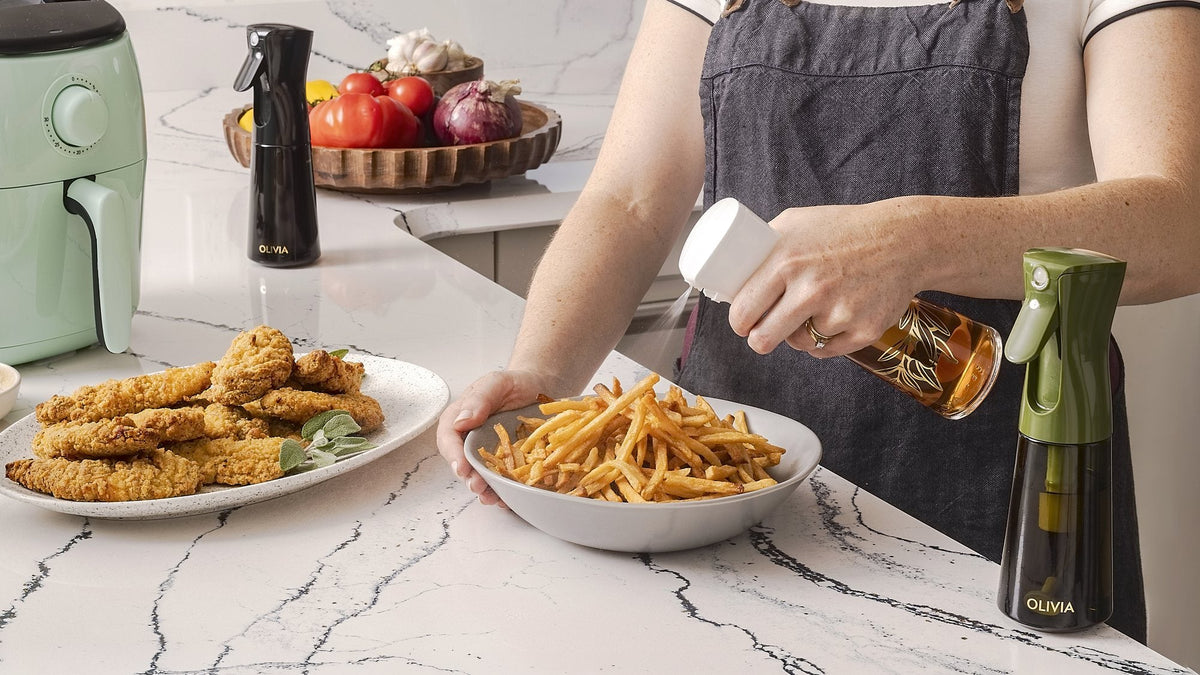
OLIVIA Signature is a refillable glass oil sprayer with a borosilicate glass bottle, so you always know exactly what is going onto your pan: the oil you poured in, and nothing else. It uses no propellants or aerosol, and it sprays a fine, even mist that makes a light coat easy.
It comes in 130 ml and 200 ml sizes and in Olive Green, Golden Leaves and Black. The 200 ml OLIVIA oil sprayer in Black is a good size to keep beside the stove for daily cooking, and like any olive oil spray bottle it does its best work when you keep the coat light.
Frequently Asked Questions
Why does olive oil spray turn brown?
On a pan, olive oil spray turns brown when the thin coat is heated and starts to oxidize and polymerize, especially on the cooler edges where it never fully cooks off. Too much heat speeds this up. Using a light coat at moderate heat and washing the pan the same day keeps it from building into a brown film.
How do you get rid of sticky oil residue on pans?
Soak the pan in hot water with dish soap, then scrub the sticky spots with a paste of baking soda and water. For stainless steel you can simmer water with baking soda in the pan first. On cast iron, scrub with coarse salt and reheat the pan so the film hardens into seasoning.
Why is my pan sticky after washing?
A pan that is sticky after washing usually still has a thin layer of oil on it, often because it was rinsed in cool water or washed without enough soap. Wash it while it is still warm with hot water and dish soap, and pay attention to the walls and rim.
How do you clean sticky residue off nonstick pans?
Let the pan soak in hot soapy water for 20 to 30 minutes, then rub the residue gently with a baking soda paste and a soft sponge. Avoid steel wool and abrasive powders, which scratch the coating and give residue more places to cling.
Does olive oil spray go bad?
Yes. Olive oil slowly loses freshness once it is exposed to air, light and heat, and oil sitting in a sprayer for months can turn stale. Refill your sprayer with smaller amounts more often, keep it away from the stove's direct heat, and clean it every few refills.
Clean pans, a light mist of plain oil and a quick warm wash: that is really all it takes to keep the sticky film gone for good.